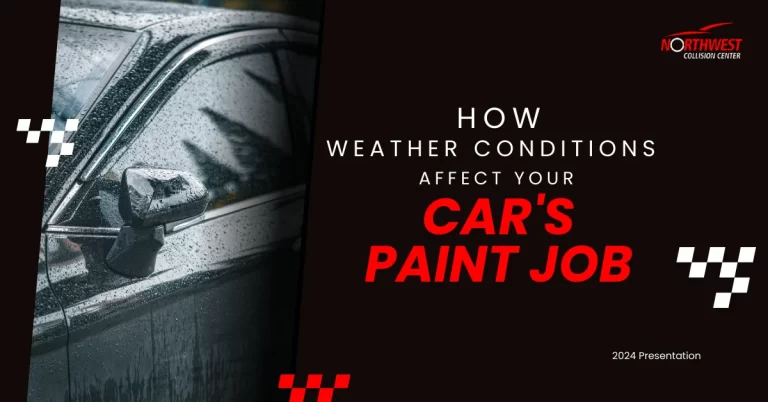
The weather can mess up your car’s paint in a lot of ways, especially in a sunny coastal area like St. Petersburg, FL.
Sunlight can fade the color and make it look dull, while rain and moisture can cause rust, particularly if your car already has scratches or chips.
Extreme hot or cold temperatures may cause the paint to crack or peel, and contaminants such as bird droppings or tree sap can eat through the clear coat.
Working with professional car painting specialists and keeping up with regular washing, waxing, and protection are some of the best ways to help your car keep looking good over time.
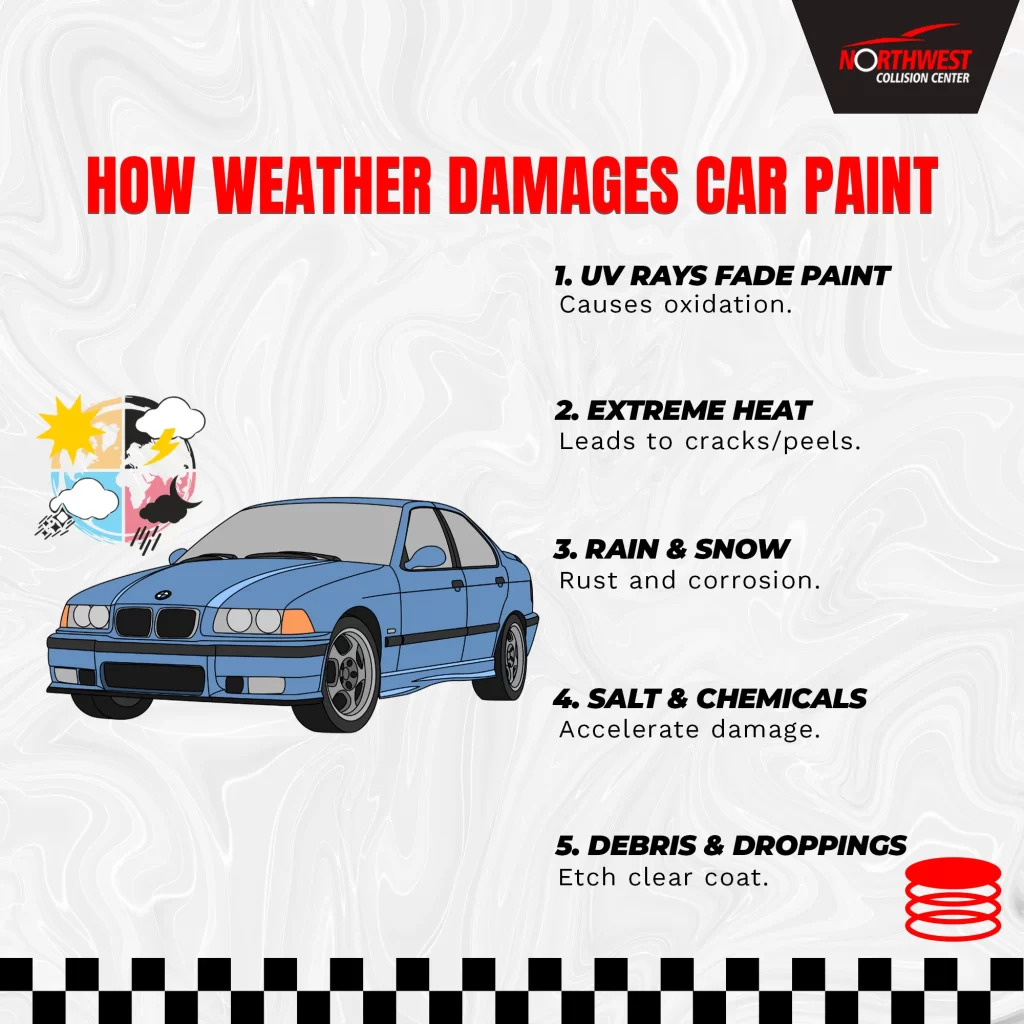
Key Takeaways
- Harsh weather and UV rays can cause paint fading and oxidation, which dulls your car’s finish over time.
- Extreme temperatures can lead to cracking and peeling, which weakens both appearance and protection.
- Acid rain and pollutants contribute to paint deterioration and can accelerate corrosion on exposed metal.
- Rain and moisture increase the risk of rust, especially where scratches, chips, or bare metal are already present.
- Regular maintenance, such as washing, waxing, and timely auto paint repair services, is crucial for protecting paint and extending its lifespan.
Why Your Car’s Paint Job Is More Vulnerable Than You Think
Your car’s paint does more than make it look nice; it also protects the metal beneath from rust and damage.
Modern clear coat finishes are relatively thin and constantly exposed to the elements. If you neglect basic paint care, you can end up with faded, rough, or peeling surfaces that hurt both appearance and resale value.
Understanding how vulnerable automotive paint really is helps you take better care of it before problems become expensive.
The Protective Role of Automotive Paint
Automotive paint serves as your vehicle’s first line of defense. The combination of base color and clear coat forms a barrier between the metal body and the outside world. UV rays, road debris, chemicals, and moisture all try to break that barrier down.
Without regular cleaning and protection, the clear coat can oxidize, thin out, and eventually fail. Once that happens, the color layer and even the metal underneath are at much higher risk.
How Neglecting Paint Care Can Hurt Resale Value
Neglecting your paint may not seem urgent at first, but it has a real impact on resale value.
Fading, oxidation, heavy scratches, and clear coat failure make buyers wonder what else has been ignored. Dirty or stained paint can also make a newer car look older than it really is.
Regular washing, decontamination, and protection help your paint stay presentable so you can ask for a stronger price when it is time to sell or trade in.
How Sun and Heat Damage Car Paint
In a place with strong sun like St. Petersburg, your car spends a lot of time under UV exposure and high temperatures.
Even if you are not driving, the sun continues to work on the finish while the car is parked.
Fading and Oxidation from UV Rays
UV rays gradually break down the clear coat at the surface. Over time, you see:
- Color fading and uneven tones
- Loss of gloss and shine
- A chalky or rough feel on the surface
This oxidation is especially noticeable on darker colors and horizontal panels such as the hood, roof, and trunk.
Regular washing and waxing, plus periodic polishing, help slow this process and keep your paint looking brighter.
Cracking and Peeling Caused by Extreme Temperatures
Extreme heat and rapid temperature changes can cause stress in the paint layers. When the clear coat dries out or becomes brittle, it is more likely to:
- Develop small cracks that spread over time
- Bubble or lift where moisture or contaminants are trapped
- Start peeling, often at edges or previously repaired areas
Once the clear coat begins to fail, the only real fix is refinishing the affected panels, which makes prevention much more cost effective.
The Impact of Rain, Snow, and Moisture
Moisture can be just as harmful to paint as the sun, especially when combined with dirt, salt, and pollutants.
Water Spots, Rust, and Corrosion Risks
Rainwater and sprinkler water often contain minerals and contaminants. When they dry on the surface, they leave behind water spots that can etch into the clear coat.
If moisture reaches bare metal through chips or scratches, it can start rust that spreads underneath the paint.
Over time, you may see:
- Persistent water spotting that will not wipe away
- Rust bubbling at rock chips or wheel arches
- Stains and streaks on lower panels
Drying your car after washing or rain and addressing chips early helps reduce these risks.
Salt and Road Chemicals That Accelerate Paint Damage
In some areas, winter salt and road chemicals are common. Even in warmer climates, certain cleaners or construction chemicals can splash on your car.
These substances:
- Strip protective wax or sealant from the surface
- Increase corrosion where metal is exposed
- Can stain or discolor the paint if left on too long
Frequent rinsing and washing are important if you drive through areas with salt, dust, or heavy construction.
Other Environmental Threats to Car Paint
Beyond weather alone, everyday environmental contaminants can cause real damage if they are not cleaned off promptly.
Tree Sap, Bird Droppings, and Airborne Debris
Tree sap and bird droppings are especially aggressive. They can:
- Etch into the clear coat and leave permanent marks
- Stain the color layer underneath
- Become harder to remove the longer they sit
Airborne debris such as dust, sand, and grit can also scratch your paint when wiped off dry. Using proper wash methods and removing droppings or sap quickly will help protect the finish.
Wind-Driven Sand and Dust in Coastal or Dry Regions
Coastal winds and dry conditions can carry sand and dust that constantly hit your vehicle while you drive or even while it is parked.
Over time, this:
- Dulls gloss by creating fine scratches
- Wears away protective wax or sealant
- Makes washing more risky if you drag grit across the surface
Rinsing thoroughly before washing and applying a strong protective layer help paint stand up better in these conditions.
Practical Ways to Protect Your Car’s Paint
The good news is that a few consistent habits go a long way toward protecting your finish.
- Wash regularly: Use proper car shampoo and soft mitts to remove contaminants safely.
- Apply wax or sealant: A protective layer makes it harder for sun, rain, and fallout to reach your clear coat.
- Park smart: Choose covered or shaded parking when possible, and avoid parking under sap heavy trees or habitual bird roosts.
- Fix damage early: Small chips, deep scratches, and clear coat failure areas should be addressed quickly to prevent spreading problems.
For more serious issues such as deep fading or heavy oxidation, professional help from St. Petersburg auto paint experts can restore your finish more effectively than DIY products.
Protect and Restore Your Car’s Finish with Northwest Collision Center
When weather and time have taken a toll on your paint, our team at Northwest Collision Center is here to help. We understand how Florida’s sun, rain, and coastal environment affect your finish, and we tailor our services to restore both appearance and protection.
Professional Auto Painting and Refinishing Services
Our professional auto painting and refinishing services are designed to:
- Refresh faded or heavily oxidized finishes
- Repair peeling clear coat and paint failure areas
- Correct damage from previous poor quality paint work
We use quality materials and controlled spray environments so your new finish looks clean and holds up better against future weather.
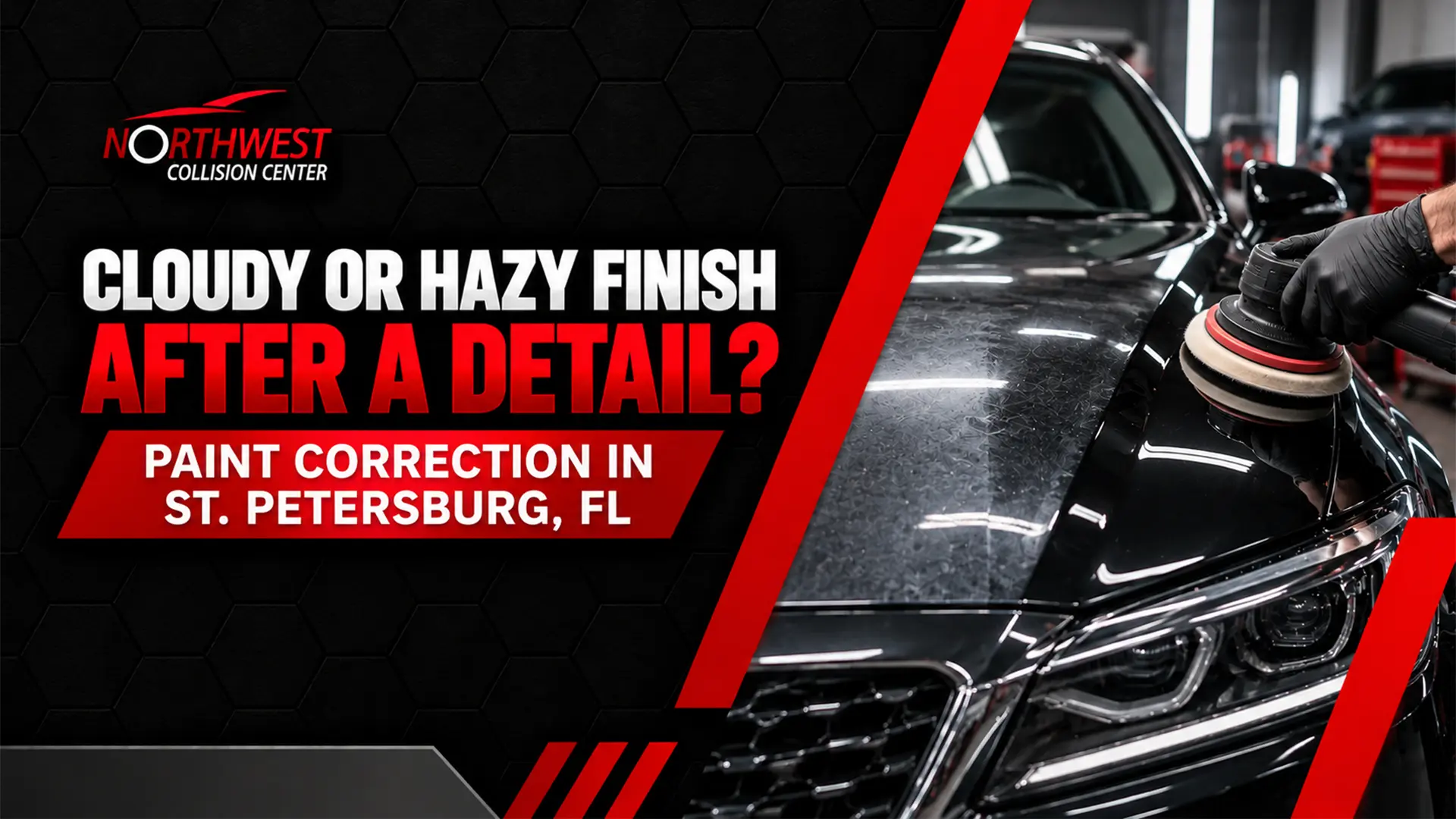
Paint Correction to Remove Fading and Imperfections
Paint correction is a process that carefully removes a thin layer of clear coat to level out imperfections. This service helps to:
- Reduce or eliminate light scratches and swirl marks
- Improve gloss and depth in tired or dull paint
- Remove surface oxidation and restore a more even appearance
When combined with protection after correction, your vehicle can look significantly newer without a full repaint.
Contact Us Today for Expert Paint Care
If sun, rain, or everyday wear have affected your paint, our team can help. We will look over your vehicle, explain your options, and recommend a plan that fits your goals and budget.
Schedule expert paint care today.
Frequently Asked Questions
How Often Should I Wash My Car to Protect the Paint?
In general, washing every two weeks is a good starting point. If you park outside, drive near the coast, or notice heavy dirt or pollen, you may want to wash more often. Regular washing removes contaminants before they can bond to the surface or start damaging the clear coat.
Does Waxing Help Against Weather-Related Paint Damage?
Yes, waxing adds a sacrificial layer on top of your clear coat. It helps repel water, shields against UV exposure, and makes it harder for contaminants to stick. Applying wax or sealant several times a year can significantly slow down wear from weather.
Can Bird Droppings Damage My Car’s Paint Job?
Bird droppings are acidic and can quickly etch into the clear coat, especially on hot panels. If left in place, they may leave permanent marks. It is best to soften and remove droppings as soon as you notice them using proper cleaners and soft towels.
What Are Signs of Paint Damage from Weather Exposure?
Common signs include fading or dull color, rough or chalky surfaces, cloudy or peeling clear coat, water spots that do not wash off, and rust developing near chips. If you see these, it may be time for professional evaluation and possible correction or repainting.
Is It Safe to Park My Car Under a Tree?
Parking under a tree can protect from sun exposure, but it also increases the risk of sap, bird droppings, and falling debris. If you must park under trees, regular washing and quick removal of contaminants become very important.
When Should You Repaint Your Car?
You should consider repainting when the clear coat is peeling, when large areas look significantly faded or discolored, or when rust has begun to spread under the paint. If you notice that washing, waxing, or polishing no longer improves the appearance in certain areas, that is often a sign that the existing finish has reached the end of its life and a new paint job is the best solution.
Conclusion
Keeping your car’s paint healthy is one of the best ways to preserve both its appearance and its value. Sun, rain, temperature changes, and everyday contaminants all work against your finish, especially in a coastal city like St. Petersburg, Florida.
With regular care and help from experienced professionals when needed, you can keep weather damage under control and enjoy a vehicle that looks better for longer.
When you are ready to protect or restore your paint, our team at Northwest Collision Center is here to provide the expert care your car deserves.