Quality paint directly affects your car’s resale value because buyers judge condition, maintenance, and risk the moment they see the finish. Glossy, consistent paint suggests careful ownership, while fading, oxidation, or mismatched panels signal neglect and future repair costs, cutting hundreds or more from offers. Professional refinishing, especially in harsh climates like Florida, can shift your car from wholesale to retail pricing and reduce buyer negotiation leverage, and there’s more you can use to your advantage.
Does Car Paint Affect Resale Value? Here’s Why It Matters
When you’re selling a vehicle, buyers notice the paint before they notice the mileage or options.
Studies consistently show that clean, well-maintained finishes can increase perceived value by thousands of dollars.
In a competitive resale market like St. Petersburg, where similar cars compete side by side online and on lots, a faded, peeling, or mismatched paint job instantly pushes your listing to the bottom of a buyer’s list.
Quality auto paint and resale value; first impressions buyers notice
Although it might seem like just a cosmetic detail, your car’s paint is one of the first things buyers use to judge how well the vehicle’s been cared for—and that judgment directly influences what they’re willing to pay.
When you look at quality auto paint and resale value, you’re really looking at how buyers translate visual cues into dollar amounts.
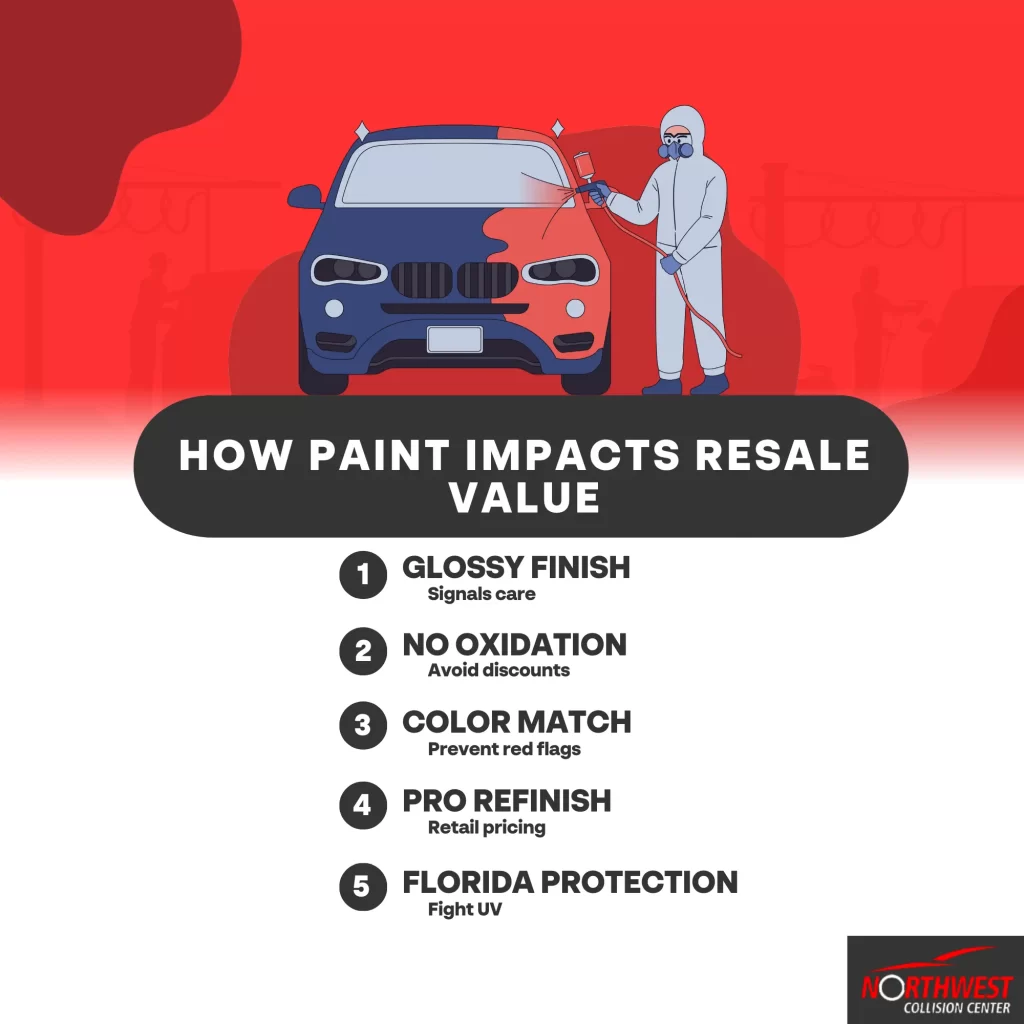
They subconsciously ask, “Does car paint affect resale value?” and then scan for oxidation, fading, mismatched panels, overspray, or orange peel.
Clean, glossy, properly matched paint suggests regular maintenance, no hidden frame damage, and no cut-corner repairs.
That’s the core importance of car paint for resale: it signals overall condition, reduces perceived risk, and gives buyers confidence to offer more—often hundreds or thousands more.
Importance of car paint for resale in competitive markets
In a crowded used-car market where buyers can compare dozens of similar vehicles online in minutes, your paint condition becomes a fast, high-impact differentiator that can either move your car to the top of the list or bury it.
Shoppers filter by price, mileage, and color, then swipe through photos; dull, oxidized, or mismatched panels signal neglect and push them toward cleaner-looking options.
Data from dealers shows that visibly damaged paint often forces discounting, while a professionally refinished exterior can support retail, not “wholesale” pricing.
That’s where vehicle paint restoration Florida services matter: precise prep, digital color matching, and quality clearcoat reduce visual age and perceived risk.
In short, auto body paint and car value Florida are tightly linked in today’s comparison-driven market.
How Paint Condition Signals Vehicle Care and Maintenance
When buyers see fading, peeling, or oxidation in your paint, they often read it as evidence of inconsistent washing, waxing, or garaging—and assume the same pattern might apply to oil changes, brakes, and other critical maintenance.
In Florida, the combination of intense UV exposure and salty coastal air accelerates clear coat breakdown and corrosion, so paint condition tells a very specific story about how well you’ve protected your vehicle from this environment.
What fading, peeling, and oxidation suggest to buyers
Because a vehicle’s exterior is the first thing shoppers see, faded, peeling, or oxidized paint often signals deeper concerns about how the car’s been cared for over time.
Buyers know paint doesn’t fail overnight, so they’ll assume long-term neglect: skipped washing and waxing, inconsistent garaging, and delayed repairs.
Fading suggests prolonged UV exposure and minimal protective maintenance. Peeling clear coat indicates low-quality refinish work or improper prep, raising doubts about prior collision repairs.
Oxidation—chalky, rough surfaces—tells buyers the paint’s protective layer has broken down, potentially exposing metal and accelerating corrosion.
All of this translates into risk in a buyer’s mind: hidden rust, possible structural damage, and upcoming repair costs.
As a result, they’ll either walk away or demand a significant price reduction.
How the Florida sun and coastal air impact paint over time
Those signs of neglect become even more significant in Florida, where the intense sun and salty coastal air accelerate paint damage far faster than in many other regions.
Constant UV exposure breaks down clear coat, causing dullness, chalky oxidation, and spider-web microcracking that’s especially visible on darker colors.
Near the Gulf, salt-laden moisture settles on your vehicle, pulls water from the air, and creates a thin, corrosive film.
If you don’t wash it off regularly, that film works its way into chips and scratches, leading to premature rust on exposed metal and clear coat failure around panel edges.
Over several years, buyers can spot this Florida-specific wear instantly, discounting your vehicle because they expect future paint and corrosion repairs.
Common Paint Issues That Lower Your Car’s Value
When buyers inspect your vehicle, they notice specific paint defects—scratches, stone chips, clear coat failure, and mismatched panels—that reliably signal wear, neglect, or past collision damage.
Market data and dealer appraisals show that these issues can cut hundreds of dollars from your trade-in or private sale price, even when the car is mechanically sound.
On top of that, poor-quality repainting, with overspray, orange peel, or color mismatch, often raises red flags about undisclosed repairs and can cause cautious buyers to walk away or demand steep discounts.
Scratches, chips, clear coat failure, and mismatched panels
Although they might seem like minor cosmetic flaws, scratches, rock chips, clear coat failure, and mismatched panels are among the fastest ways to drag down your car’s resale value.
Buyers and appraisers immediately read these as signs of neglect, possible prior accidents, or upcoming repair costs.
Even light scratches and chips break the paint film, exposing bare metal or plastic to moisture, UV, and road salt, which accelerates corrosion and oxidation.
Clear coat failure—those dull, cloudy, or peeling patches—signals UV damage and an aging finish, suggesting you haven’t protected the vehicle.
Mismatched panels are an even bigger red flag.
Uneven color or texture tells buyers a panel’s been repainted or replaced, raising questions about structural damage and lowering what they’re willing to pay.
Why poor-quality repainting can raise red flags during a sale
Even if the color looks “close enough,” poor-quality repainting is one of the quickest ways to make buyers suspicious and appraisers conservative.
Trained inspectors and informed shoppers know that sloppy paint often hides accident damage, rust, or cut-rate repairs. The result is hesitation, lower offers, and tougher negotiations.
They’ll look for visual and tactile clues that your car’s been repainted on the cheap:
- Uneven orange peel texture that doesn’t match adjacent panels
- Overspray on trim, glass, rubber seals, or wheel wells
- Tape lines, dry edges, or paint on fasteners and weatherstripping
- Color that shifts under different lighting or doesn’t match door jambs
Using a certified shop with digital color matching and proper prep preserves trust—and your resale value.
Vehicle Paint Restoration in Florida: When It’s Worth It
In Florida’s harsh sun and salty air, you’ll get the best return on paint restoration when the cost of correction is clearly outweighed by the added resale value or trade-in offer.
That means understanding whether you need light paint correction, panel refinishing, or a full respray, based on factors like clear coat depth, oxidation level, and the car’s remaining market life.
When paint correction or refinishing makes financial sense
Vehicle paint restoration in Florida is worth the investment when the cost of professional correction is clearly outweighed by the bump it gives your vehicle’s resale value and marketability.
You’ll want to run the numbers: compare written estimates for paint correction or refinishing against current private‑party and trade‑in values for your make, model, and mileage.
Paint work typically makes financial sense when you’re offsetting visible, value-killing defects, such as:
- Noticeable clear coat failure, oxidation, or sunburned panels
- Moderate scratches, bumper scuffs, or key marks that break the clear coat
- Faded or mismatched panels from prior low-quality repairs
- Preparing a well‑maintained Tesla, luxury, or late‑model vehicle for resale
In Florida’s UV-heavy climate, correcting these defects often narrows buyer negotiation leverage and shortens time on market.
Auto body paint and car value in Florida; choosing the right repair level
Although fresh paint can dramatically transform how a car looks, the real financial win in Florida comes from choosing the right level of repair for your vehicle’s age, condition, and market.
In St. Petersburg’s sun, salt, and humidity, buyers spot clearcoat failure, fade, and oxidation—and they’ll discount heavily for it.
You’ll usually see the best resale return from targeted refinishing: repairing collision damage, blending adjacent panels, and correcting severe fade on hoods, roofs, and trunk lids.
Full repaints typically make sense for newer or higher‑value vehicles, or when factory‑level color match is essential, like on Teslas and luxury brands.
A shop with digital color matching, frame measuring, and written lifetime paint warranties helps protect both your investment and future buyer confidence.
Quality Paintwork: What Separates Professional Results
When you’re protecting resale value, quality paintwork isn’t about a quick spray—it starts with meticulous prep, premium primers and clearcoats, and controlled curing in a professional spray booth so the finish actually lasts in Florida’s heat and humidity.
You also need precise color matching and expert blending, so repaired panels visually disappear and your vehicle retains a factory-like, uniform appearance under any lighting.
Studies and insurer data show that vehicles with OEM-spec materials and professional refinishing standards not only look better but typically appraise higher and sell faster.
Proper prep, premium materials, and controlled spray booth curing
Because modern buyers can instantly spot the difference between a quick respray and a factory‑level refinish, true quality paintwork comes down to disciplined prep, premium materials, and tightly controlled curing conditions.
When a shop like Northwest Auto Collision methodically sands, degreases, and masks your vehicle, it creates the mechanical “tooth” and clean surfaces paint needs to bond.
Premium primers, sealers, basecoats, and high‑solids clear coats cost more, but they resist UV fading, peeling, and chalking—key issues buyers look for when judging value.
A professional spray booth then regulates airflow, humidity, and temperature so each coat flashes properly and cures to OEM‑grade hardness.
- Panel surfaces stripped of contaminants
- Precision masking around trims and edges
- Even film build with minimal orange peel
- Oven‑baked curing for durable gloss
Color matching and blending for a factory-like finish
Even with the best prep and materials, a repaint only looks truly “right” if the color and gloss flow seamlessly into the surrounding panels. That’s where precise color matching and blending separate pros from everyone else.
Modern factory finishes use complex basecoat/clearcoat systems, metallics, pearls, and multi-stage colors that shift with light and viewing angle.
A professional shop digitally scans your paint, then fine‑tunes toners, metallic size, and flop to compensate for sun fade and OEM batch variations.
Technicians spray test cards, compare under natural and artificial light, and adjust until the match is exact.
Blending into adjacent panels hides even microscopic shade differences, preventing visible “repair edges” that appraisers, buyers, and lease inspectors spot immediately.
How Paint Work Supports Trade-In and Private Sale Pricing
When you bring a vehicle in for trade or list it for a private sale, trained eyes immediately assess the exterior for paint consistency, gloss, overspray, color match, and evidence of prior repairs.
Appraisers routinely discount vehicles for clear coat failure, mismatched panels, or visible touch-ups because industry data shows buyers associate those flaws with poor maintenance and higher future repair costs.
What dealers and appraisers look for in exterior condition
Although every dealership and appraiser uses its own checklist, they’re all effectively grading the same exterior fundamentals: paint consistency, panel alignment, evidence of previous repairs, and overall gloss and cleanliness.
You’re fundamentally being scored on how original, well-preserved, and professionally refinished the exterior appears.
They’ll visually scan the vehicle in direct light, then at angles, using experience—not just opinion—to spot red flags that justify deductions.
- Uniform color and texture from panel to panel, without overspray or mismatched shades
- Consistent panel gaps that suggest undisturbed structure and correct reinstallation
- Subtle signs of repair: tape lines, dust in clearcoat, sanding marks, or wavy reflections
- Surface health: oxidation, clearcoat failure, scratches, and etching that indicate neglect
Each of these items feeds directly into the condition rating that drives your offer.
How strong paint condition helps you justify your asking price
Strong paint condition acts like a visual proof-of-value that supports the number you’re asking for, whether you’re at a dealership or listing the car yourself.
When the finish is glossy, color-matched, and free of clear coat failure, buyers subconsciously categorize your vehicle as “well-maintained,” which narrows negotiation room.
Clean, consistent paint also reduces a buyer’s perceived reconditioning costs. If they don’t see faded panels, mismatched repairs, or overspray, they’re less likely to mentally subtract repaint or touch-up expenses from your asking price.
On trade-ins, appraisers use exterior condition as a quick proxy for overall care, often tying it to book-value ranges.
Professional work—like digital color matching and quality clear coat—helps keep your car at the top of that range.
Protect Your Resale Value with Paint Restoration at Northwest Collision Center in St. Petersburg, FL
Preservation of your vehicle’s finish isn’t just about looks—it’s a direct factor in its resale value.
A flawless finish safeguards more than appearance; it directly protects your vehicle’s resale and trade-in value
When you bring your car to Northwest Auto Collision in St. Petersburg, you’re leveraging more than 65 years of paint and restoration expertise to protect that value.
- Oxidized, faded clear coat corrected to a deep factory gloss
- Rock chips and scratches blended so they’re virtually undetectable
- Tesla and luxury-brand finishes restored to meet strict buyer expectations
- Lifetime-warrantied paintwork that reassures future owners
Our technicians use digital color matching, manufacturer-approved materials, and controlled bake booths to return your finish to like-new condition, supporting both trade-in and private sale prices. If you’re looking for paint restoration made by experts, then contact us to get an estimate.
Frequently Asked Questions
How Does Florida’s Sun and Humidity Specifically Affect Long-Term Vehicle Paint Quality?
Florida’s intense UV and humidity cause clearcoat oxidation, fading, chalking, peeling, and mold in seams. You’ll see premature dulling, water-spot etching, and corrosion at chips, so you need high-solids paint, ceramic protection, and meticulous maintenance.
Will Repainting My Car Void Any Existing Manufacturer or Corrosion Warranties?
It might, depending on manufacturer rules. You’ll need OEM-approved materials, procedures, and corrosion protection. At Northwest Auto Collision, certified techs document repairs and follow specs designed to maintain, not jeopardize, Tesla and other factory and perforation-corrosion warranties.
Does Changing My Car’s Color Hurt or Help Its Resale Value?
Changing your car’s color can hurt resale if buyers doubt workmanship or originality. But if you choose a popular, professional, factory-quality refinish, it’s often value-neutral—or even positive—especially when documented by a reputable shop like Northwest Auto Collision.
How Do Insurance Companies View High-Quality Repainting After an Accident?
Insurers usually approve high-quality repainting as restoring pre-loss condition, not an “upgrade.” If you use OEM-approved materials, documentation, and a reputable shop like Northwest Auto Collision, you’re more likely to avoid diminished-value disputes later.
Are OEM Paints and Aftermarket Paints Different in Terms of Resale Impact?
They can be. OEM paint usually reassures buyers about originality, color accuracy, and compatibility with factory corrosion protection. High-end aftermarket systems, professionally applied with digital color matching and documented warranties, often protect resale nearly as well—or better than mediocre OEM repairs.
Takeaways
When you’re ready to sell or trade, your car’s paint is a powerful, proven profit protector. Smooth surfaces, seamless color, and skillful repairs signal steady, serious care that buyers can see—and trust. Instead of sunburnt, salt-stained, or spotty panels, professional refinishing gives you crisp, consistent, confidence-boosting curb appeal. By investing in precise color matching and meticulous prep at Northwest Collision Center, you’re not just restoring shine—you’re strategically strengthening your vehicle’s resale value in St. Petersburg’s competitive market. Visit us at 3301 Tyrone Blvd. N. St. Petersburg, FL 33710 or call us at 727-347-8945.