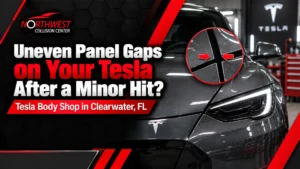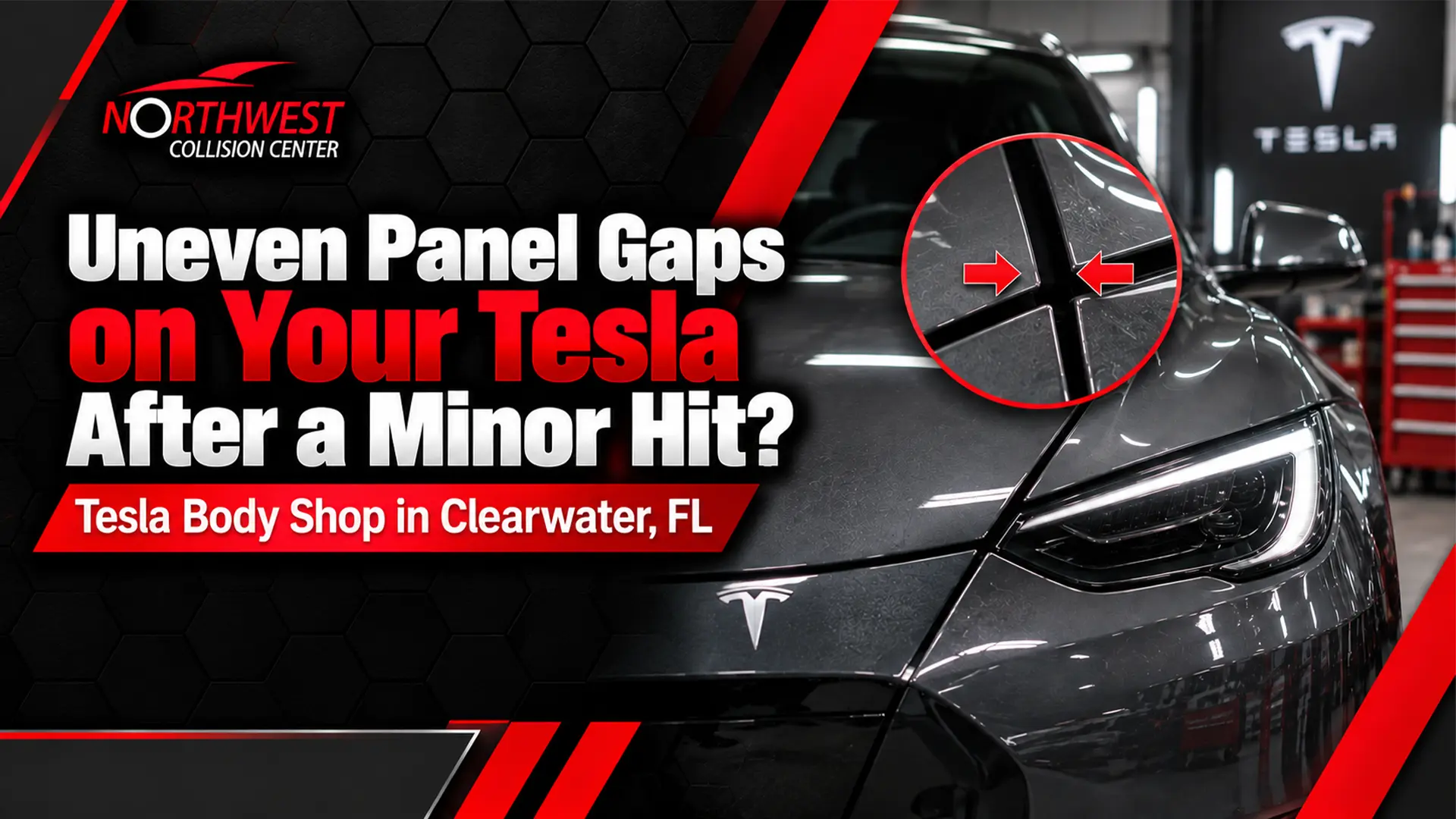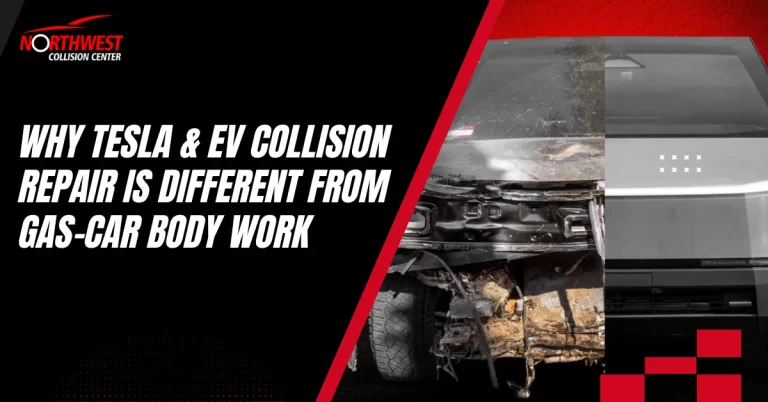
A Tesla or electric vehicle can look simple from the outside after a crash. A scraped bumper, dented quarter panel, or shifted headlight may seem like normal body damage. Underneath, the repair can be much more technical. EV collision repair involves battery protection, aluminum repair methods, sensor awareness, and refinishing decisions that are different from many gas-powered vehicles. For drivers near Tyrone, Pinellas County, and the Gulf beaches, choosing a shop that understands modern EV body work can make a real difference. Northwest Collision Center provides Tesla auto body repair in St. Petersburg for local drivers who need careful repairs after an accident, parking-lot hit, or coastal-weather damage.
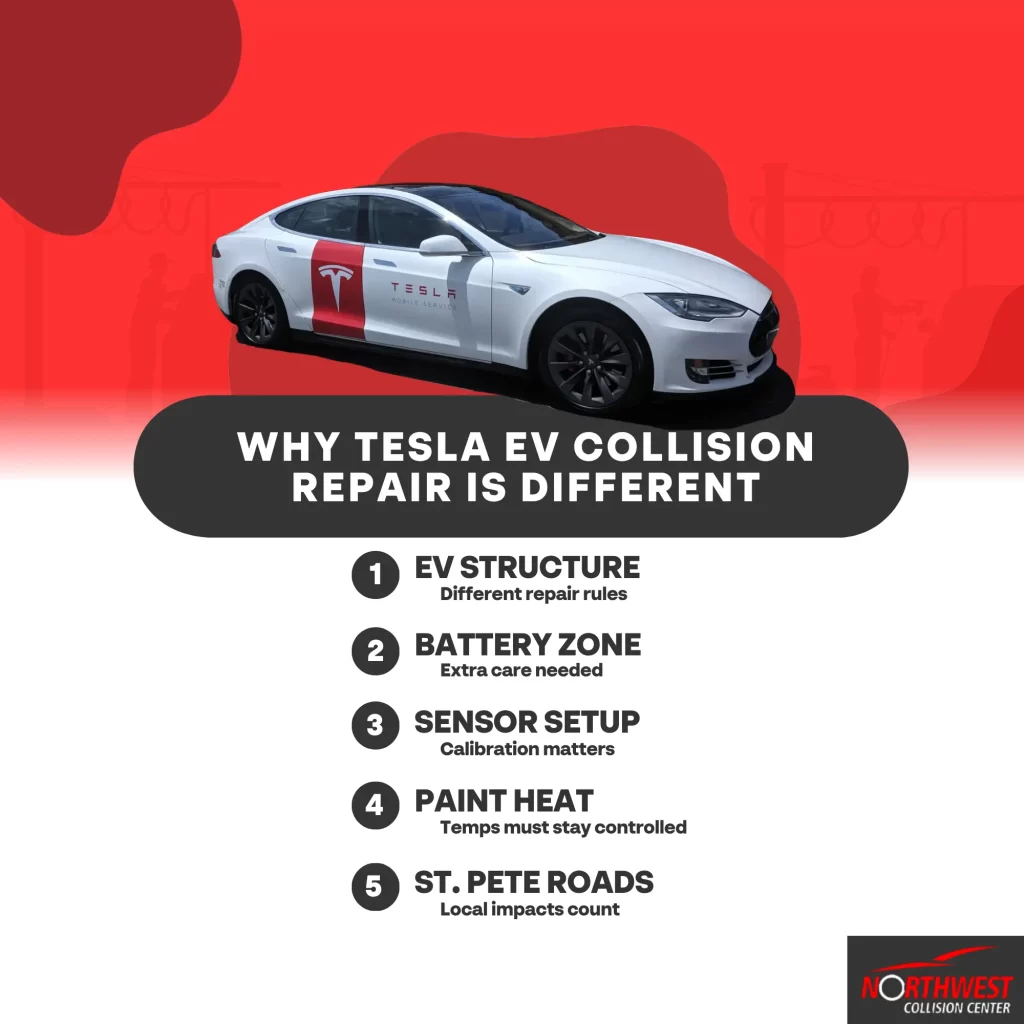
Why EV Collision Repair Is Different From Standard Body Work
EVs are built around different priorities than older gas vehicles. Battery placement, weight distribution, structural materials, and electronics all affect how the vehicle absorbs impact and how repairs should be planned.
The vehicle structure changes the repair plan
Many electric vehicles use a low-mounted battery pack as part of the vehicle’s overall design. That can help with stability on the road, but it also means collision repair has to consider structural load paths, mounting points, lift points, and hidden damage under the vehicle. A gas-car repair may focus mainly on sheet metal, frame alignment, and paint. EV collision repair often requires a deeper inspection before the visible body work begins. A minor-looking side impact near a rocker panel, for example, can raise different questions on an EV than on a traditional sedan.
High-voltage systems require careful handling
The high-voltage battery is one of the biggest differences between gas-car body work and electric vehicle collision repair. Technicians need to understand where sensitive components are located and how to avoid creating risk while disassembling panels, checking underbody areas, or preparing the vehicle for repair. That does not mean every EV accident damages the battery. It means the inspection process has to account for how the car is engineered. Safe handling, proper repair planning, and careful checks help protect both the vehicle and the people working on it.
Why Tesla Repairs Need a Different Level of Planning
Tesla vehicles are known for their clean exterior design, but the repair process is rarely basic. Panel fitment, aluminum components, cameras, sensors, and software-connected systems can all affect the work.
Aluminum panels behave differently than steel
Many Tesla repairs involve aluminum or mixed-material construction. Aluminum repair is not handled the same way as conventional steel repair. It reacts differently to shaping, heat, corrosion, and contamination. With materials like these, Tesla collision repair St. Petersburg calls for a repair-first mindset instead of a quick cosmetic fix. A smooth-looking panel only tells part of the story; the repaired area also needs to match the vehicle’s material requirements, finish quality, and original design.
Sensors and cameras must be protected
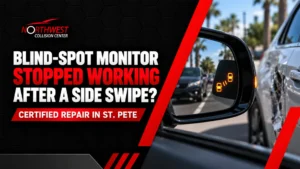
Modern EVs depend on cameras, parking sensors, radar units, and driver-assistance features. A bumper cover, mirror, grille area, or windshield-adjacent repair may involve more than paint and panel alignment. Even if a dashboard warning light is not obvious, sensor calibration and mounting accuracy can matter after a collision. Small changes in bracket position or bumper fit can affect how these systems read the road. That is especially important for drivers navigating I-275, US-19, Tyrone Boulevard, and busy beach routes where sudden stops and tight traffic are common.
How Paint, Heat, and Local Driving Conditions Affect EV Repairs
Paint work is another area where EVs can require extra thought. The finish still needs to blend beautifully, but repair teams also have to consider curing methods, nearby components, and the way heat is managed during refinishing.
EV refinishing has temperature considerations
EVs may have manufacturer-specific limits related to bake cycles, battery proximity, and component protection. Paint repair is not just about color. It is also about heat control, prep quality, and proper blending. For drivers who want to better understand why paint layers and finish depth matter, Northwest Collision Center’s guide to 3 stage auto paint explains how premium finishes can involve more than a simple spray-and-clear process.
St. Petersburg driving adds real-world wear
Local conditions can make body and paint repairs more important. St. Petersburg vehicles deal with Gulf humidity, sun exposure, salt air near the beaches, afternoon rain, and crowded parking areas around shopping centers, marinas, restaurants, and commuter routes. A Tesla or EV with chipped paint, poor panel sealing, or unfinished collision damage can show wear faster in that environment. Clean repair work helps protect the finish, reduce corrosion concerns, and keep the vehicle looking right in Florida conditions.
What to Look for in an EV Collision Repair Shop
After an accident, it is normal to look for EV body repair near you because you want help fast. Still, the closest shop is not always the right fit for an electric vehicle. EV owners should look for a repair team that can explain the process clearly, inspect beyond the obvious damage, and understand how the vehicle’s structure, sensors, and high-voltage areas affect the repair plan.
Ask about procedures, equipment, and inspection steps
A good EV repair conversation should include more than “we can fix the dent.” Ask how the shop inspects hidden damage, protects sensitive systems, handles mixed materials, and confirms panel alignment after repairs. For deeper collision damage, services such as frame straightening may be part of the repair plan. If paint is involved, digital color matching can help the repaired area blend with the rest of the vehicle, especially after Florida sun exposure has slightly changed the original finish.
Do not choose on estimate price alone
A low estimate can be tempting after an accident, especially if the car still drives. EV repairs can hide important work behind simple-looking damage. Skipping inspections, rushing disassembly, or overlooking sensor areas can create problems after the vehicle leaves the shop. EV auto body repair should focus on safety, fit, finish, and long-term confidence, not just the lowest estimate. The right shop should explain what is visible, what still needs to be checked, and why certain steps are needed before repair approval.
Takeaways
Tesla and EV body work is different because the repair involves more than exterior appearance. Battery placement, aluminum materials, sensors, calibration needs, paint heat limits, and local driving conditions all shape the repair plan. For St. Petersburg drivers, EV collision repair should be handled by a shop that understands both the vehicle and the environment it drives in. A careful repair today can help protect safety, appearance, resale value, and confidence every time you get back on the road.
Frequently Asked Questions
Is Tesla collision repair different from regular collision repair?
Yes, Tesla repairs can involve aluminum components, battery-area awareness, sensors, cameras, and unique repair procedures. A repair that looks cosmetic from the outside may require a more careful inspection than a similar gas-car repair.
Can any body shop repair an electric vehicle?
Some shops can handle basic cosmetic work, but electric vehicle collision repair often requires additional knowledge and caution. EV owners should ask about the shop’s experience with high-voltage vehicles, mixed materials, and sensor-related repair areas.
Does a minor EV accident need a full inspection?
A minor accident does not always mean major damage, but it should still be checked carefully. Bumper, rocker panel, underbody, and wheel-area impacts can hide issues that are not obvious during a quick walkaround.
Will paint repair on a Tesla match the rest of the car?
A strong paint match depends on proper prep, color matching, blending, and finish work. Sun exposure, paint type, and panel location can all affect how the final repair looks, especially in coastal Florida.
What should I do after my EV is hit?
Take photos, avoid driving if the vehicle feels unsafe, and schedule an inspection before assuming the damage is only cosmetic. If warning lights appear or the impact was near the battery, wheels, sensors, or underside, have the vehicle checked as soon as possible.
Get Tesla and EV Repair Guidance from Northwest Collision Center
If your Tesla or EV was hit in St. Petersburg, Clearwater, Pinellas Park, or anywhere around the Tampa Bay area, Northwest Collision Center can help you understand the next step. Our team works with modern collision repair needs, from careful inspections to paint matching and structural repair planning. For EV collision repair, do not wait for small damage to turn into a bigger concern. Visit our auto body shop at 3301 Tyrone Blvd. N. St. Petersburg, FL 33710, or call 727-347-8945 to talk through your repair needs. We will help you understand the damage, the repair path, and what it takes to get your vehicle looking and driving the way it should.