
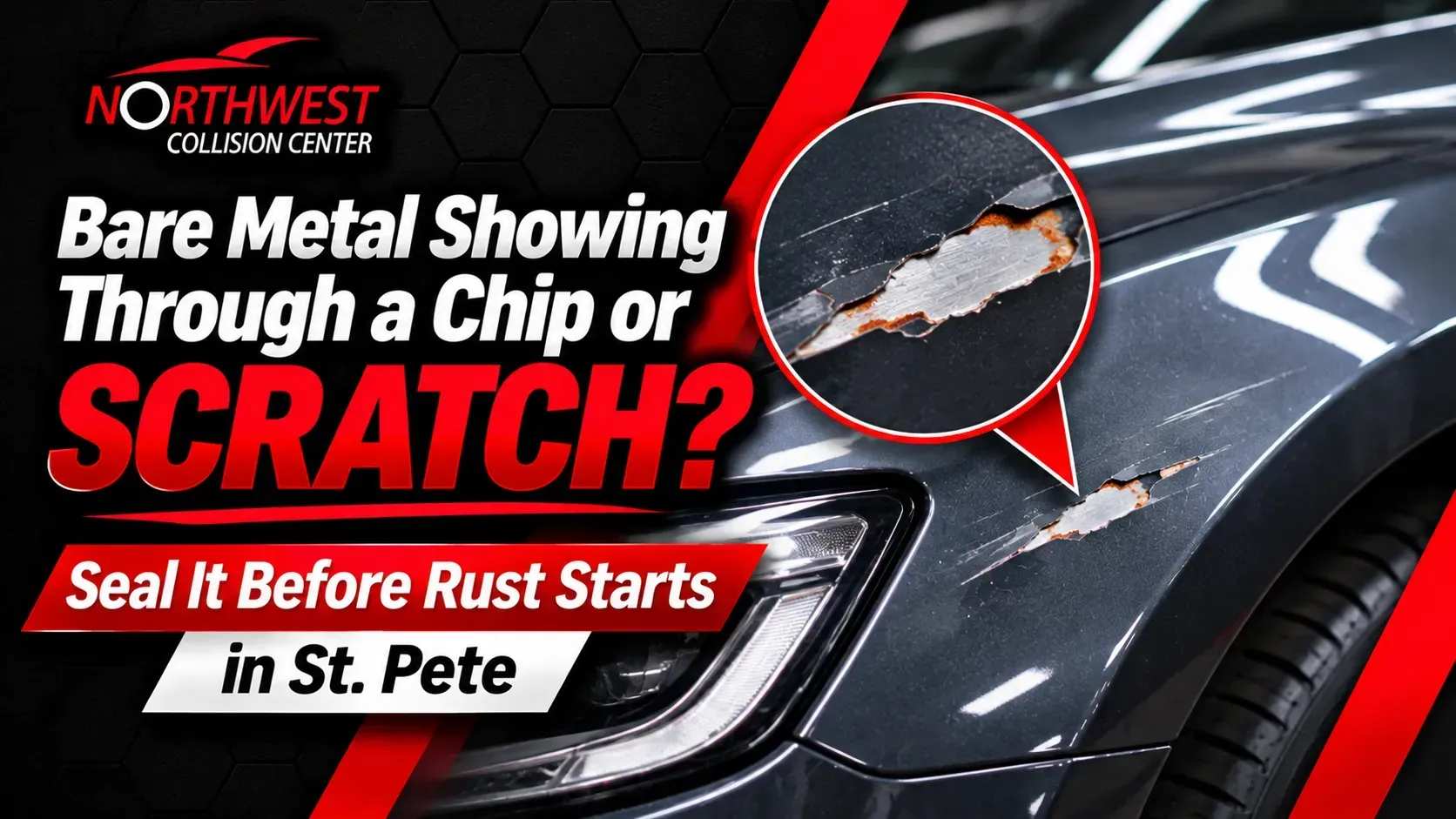
Bare Metal Showing Through a Chip or Scratch? Seal It Before Rust Starts in St. Pete
Greg Descent
Blog Categories:
A bare metal car scratch should be cleaned, dried, and sealed promptly. Exposed steel can begin corroding once moisture reaches it. In St. Petersburg, humidity, sudden rain, and salty coastal air can keep even small paint breaks damp.
When a chip or scratch is too deep for a simple touch-up, our
automotive refinishing service can restore the protective layers and help protect the exposed metal. Addressing paint damage early helps prevent corrosion from spreading and protects your vehicle's exterior from further deterioration.
Why a Bare Metal Car Scratch Needs Quick Attention
A deep scratch needs quick attention because automotive paint is a layered barrier, not just decoration. Clear coat protects the color coat, while primer helps the coating bond and shields the panel. When damage cuts through all three, water and oxygen can reach steel directly.
How to Tell Whether Metal Is Exposed
Exposed metal often looks silver or gray at the deepest point of the mark. A white or light gray layer may be primer instead, while a dark flexible surface may be plastic. Clean the spot gently before judging it because wax, dirt, and transferred paint can hide the true depth.
Run a clean fingernail lightly across the damage without picking at loose edges. If the mark catches deeply, spans a panel edge, or shows a bright metallic center, arrange an inspection. Our collision and auto body repair work accounts for the panel material and the full depth of visible damage.
Why St. Pete Weather Raises Rust Risk
St. Pete weather raises the risk because exposed steel can stay damp after afternoon storms, overnight humidity, or trips near the Gulf beaches. Salt carried in coastal air can also make a damaged area harder to keep clean. A chip on a hood, roof edge, wheel arch, or door seam may hold moisture longer than an open, flat spot.
Florida's road-ready vehicle guidance encourages drivers to keep vehicles maintained before travel. Paint damage is rarely a roadside emergency, but prompt paint chip rust prevention can keep a cosmetic defect from becoming corrosion that needs metal work.
What to Do Before Rust Starts
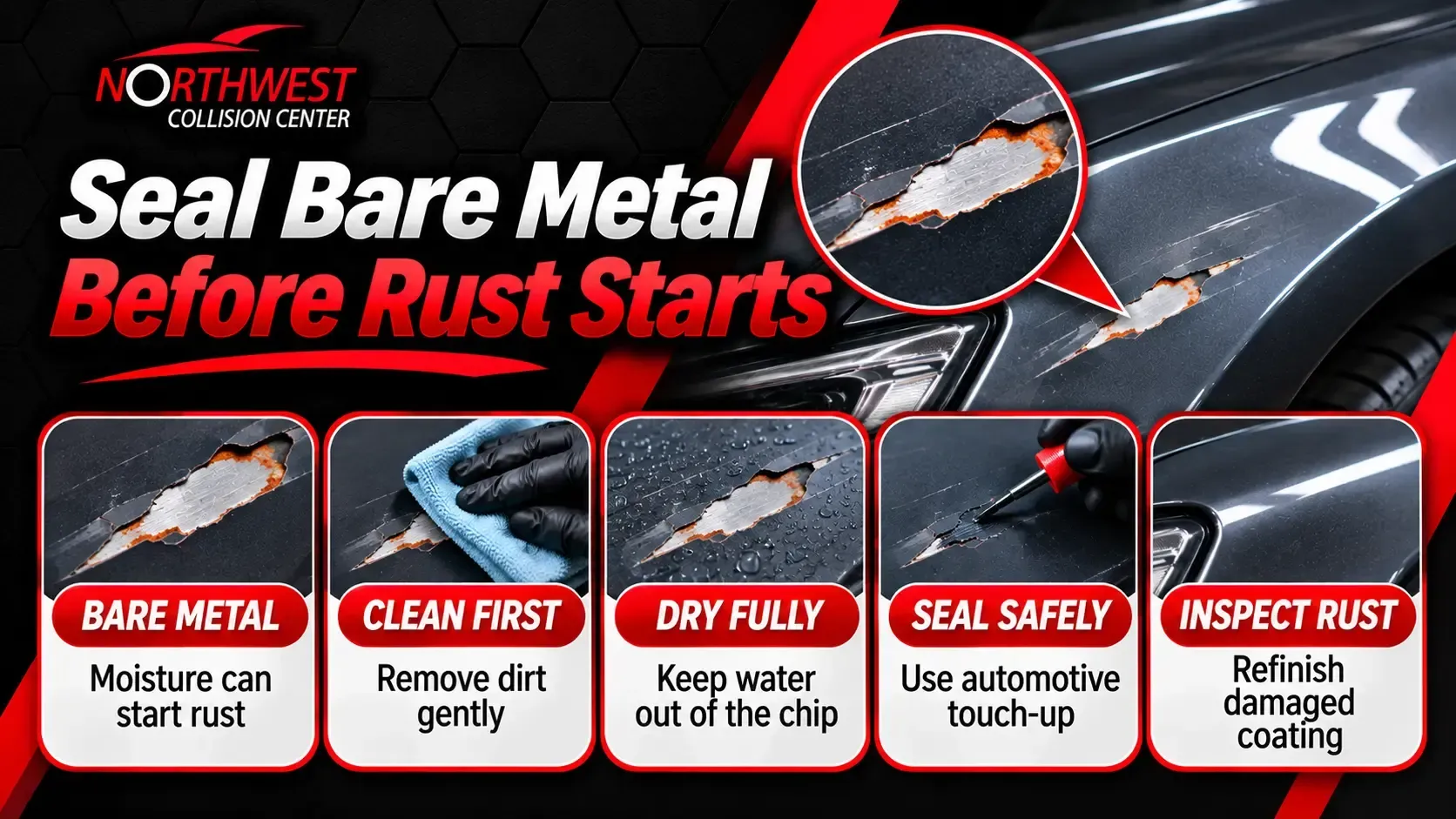
The safest first step is to clean the spot, remove moisture, and protect it from more water until a lasting repair is possible. These steps limit exposure, but they do not replace correct preparation, primer, color, and clear coat when the finish is breached.
Clean and Dry the Damage
Clean the damage with mild car-wash soap and water, then pat it dry with a clean microfiber towel. Avoid aggressive scrubbing because loose paint edges can widen the chip. Keep the vehicle under cover until the area is fully dry, especially after a Tampa Bay downpour.
Use Temporary Protection Carefully
A vehicle-specific touch-up system may temporarily seal exposed car metal when the damage is tiny, clean, and free of rust. Follow the product directions, confirm the factory paint code, and use primer when the system calls for it. A temporary seal works best as a bridge to proper repair, not as a way to hide active corrosion.
Know What Not to Put on the Scratch
Do not cover a wet or rusty scratch with wax, household paint, or an unknown coating. Moisture trapped beneath a quick cover can let corrosion continue out of sight. Avoid sanding a modern panel unless you understand its material and coating system, since an oversized sanded area creates more refinishing work.
When Touch-Up Paint Is Not Enough
Touch-up paint is not enough when rust is visible, paint is lifting, or the damage is too wide for a controlled spot repair. A long key scratch, damage across a body line, or a chip at a panel edge may need sanding and corrosion treatment. The repair may also require primer, color matching, and clear coat blending.
Signs Rust Has Already Started
Early rust may appear as an orange-brown dot, dark staining, rough texture, or a small bubble under nearby paint. Do not scrape the bubble open. Corrosion can extend beyond what is visible, so a shop may need to remove loose coating and inspect the sound metal around it.
When Professional Refinishing Is the Better Repair
Professional refinishing is the better repair when appearance, corrosion control, and a smooth finish all matter. It is also sensible when the scratch crosses multiple layers or sits where water collects. For car scratch repair in St. Petersburg, FL, that drivers can rely on, the repair plan should match the panel material, damage depth, and existing paint finish.
How We Assess Exposed Paint Damage
We assess exposed paint damage by checking the panel material, size, depth, location, loose edges, and any signs of corrosion. At Northwest Collision Center, we explain whether a small localized repair is reasonable or whether refinishing a larger section will produce better protection and appearance.
Material, Depth, and Location Matter
Steel can rust, aluminum can oxidize, and plastic will not rust, but each material needs the right preparation. Panel edges, seams, and wheel openings also behave differently from a flat door surface. Our Mazda repair specialists work with brand-specific body materials and refinishing needs, and our shop services other makes and models as well.
Color Matching and Sealing the Panel
A lasting repair removes contamination and corrosion before rebuilding the protective coating layers. The color is then matched and blended as needed, followed by clear coat for gloss and protection. Careful preparation matters as much as color because paint applied over moisture, rust, or weak edges may fail again.
Takeaways
A bare metal car scratch should not be left open to St. Petersburg rain, humidity, or coastal air. Clean and dry the damage, keep it covered from weather, and use only a suitable vehicle touch-up system as temporary protection.
If you see rust, lifting paint, a long gouge, or damage at a seam, schedule an assessment. Early repair can keep the affected area smaller and restore the paint system before corrosion spreads under nearby coating.
Frequently Asked Questions
Can bare metal rust overnight?
Yes, bare metal can begin developing surface oxidation overnight when exposed to moisture and oxygen. Visible rust may take longer to appear, but St. Pete humidity and rain make prompt drying and protection important.
How can I tell if a scratch reached bare metal?
You can tell if a scratch reached bare metal by looking for a bright silver or gray center and checking whether it catches a fingernail. Clean the area gently first, since transferred paint and dirt can make the damage depth difficult to judge.
Can I use clear nail polish on exposed car metal?
No, clear nail polish is not a reliable way to protect exposed car metal because it is not designed for automotive coating systems or panel movement. Use a vehicle-specific product as directed, or have the damage inspected when metal is exposed.
Will touch-up paint stop rust?
Yes, touch-up paint can help prevent rust on a tiny, clean, rust-free spot by isolating exposed metal from moisture when applied correctly. However, it will not stop existing corrosion beneath the paint, and larger damage may require professional preparation and refinishing.
Does insurance cover paint chip or scratch repair?
Yes, insurance may cover paint chip or scratch repair when the damage results from a covered event, depending on your policy and deductible. Ordinary wear is often handled differently from vandalism or a covered collision, so review your policy and ask your insurer before authorizing work.
Protect Exposed Metal With Auto Paint Repair in St. Pete
If a chip or scratch has reached metal, contact us for a clear assessment before rust moves under the surrounding paint. Review our full list of services, call (727) 347-8945, or visit us at 3301 Tyrone Blvd. N., St. Petersburg, FL 33710. We will inspect the finish, explain the repair options, and help you protect the panel from further exposure.

Greg Descent
The proprietor of Northwest Collision Center, boasts a remarkable journey in the auto repair industry. Originating from Hamilton, Ontario, Canada, Greg spent his formative years in California, where he cultivated a deep passion for automotive work.
In 1996, he seized the opportunity to acquire Northwest Collision Center, a reputable establishment founded in 1959 and situated on Tyrone Boulevard for over five decades. Greg's hands-on approach and dedication to the business have been pivotal since he first joined the team. Under his leadership, Northwest Collision Center has continued to thrive, maintaining its legacy of excellence and commitment to quality service in the automotive repair sector.
Discover More On:
