

Reupholstering your car seats can significantly improve your vehicle’s appearance, comfort, and overall value. Whether your seats are worn, torn, or simply outdated, understanding what to expect before starting the process can help you make informed decisions and avoid unnecessary surprises. Consider the Condition of the Seats Before committing to reupholstery, it’s important to assess […]

How often you should detail your car depends on your usage. If you drive daily, aim for every 4 to 6 weeks. For weekend or seasonal vehicles, every 3 to 6 months works well.

Keeping your car looking sharp is not just about running it through a basic wash. True car care goes deeper. Auto detailing is a more precise, hands-on process that cleans, restores, and protects your vehicle inside and out. For drivers in St. Petersburg, FL, who deal with sun, salt air, rain, and daily driving, staying […]

For more than a century, Americans have had a deep connection with their cars. What started with the Model T as a simple way to get from one place to another has evolved into something far more personal. Today, your vehicle represents a financial, functional, and emotional investment, and for many owners, its appearance and […]

It's no wonder why a car is a man's best friend: it takes you practically anywhere, in style. However, your beloved vehicle requires a bit of care every now and then, too. Now, should any problems interrupt your car's optimal performance, how to know if it needs some maintenance or repair work? Just sit with that for a moment. It's common not to know what the difference is. But at Northwest Collision Center LLC, we like our clients to stay well-informed about all things auto repair. Choosing the wrong type of service might be more expensive in the end, so read on, and avoid any surprises when the bill arrives.

Looking to ensure your vehicle's continued smooth and safe operation? Explore the benefits of regular car maintenance and find out how to establish a regular car maintenance routine in this blog.

The five basic maintenance tasks to keep your car running smooth and safe include sticking to scheduled maintenance services, understanding your car through its owner's manual, carrying out regular oil changes, monitoring tire pressure, and routinely checking all car fluids.
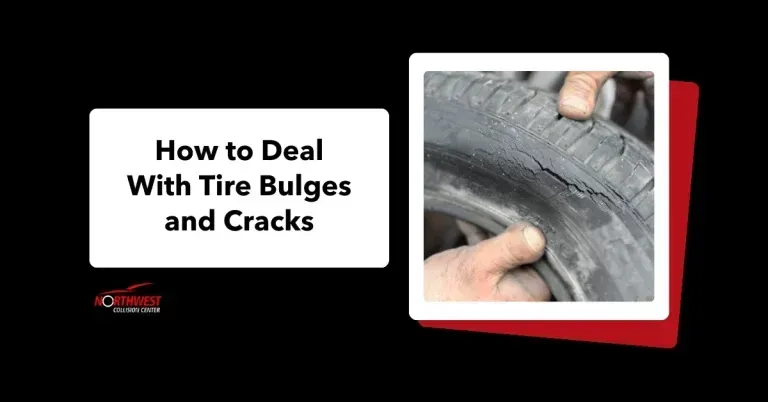
To deal with tire bulges and cracks, start by identifying warning signs like visible deformities or irregular wear. Understand that bulges often indicate internal damage from impact or over-inflation, while cracks can stem from UV exposure or improper pressure.

You should change your engine oil every 5,000 to 7,500 miles for most vehicles to guarantee peak performance. If you drive an older model, consider changing it every 3,000 to 5,000 miles due to higher wear.

Typically, you should change your vehicle's oil every 3,000 to 5,000 miles. However, the exact frequency can greatly depend on specifics like your driving habits, the oil type you use, and particulars about your vehicle such as its age and make.
