
Warped or Melted Bumper Near the Exhaust? Why It Happens and the Fix in St. Pete
Greg Descent
Blog Categories:
A melted bumper near exhaust parts indicates that excessive heat is damaging the plastic. This can happen when the tailpipe sits too close to the bumper. A shifted exhaust, impact damage, or unusually high exhaust temperatures can also cause the problem.
At
Northwest Collision Center, we inspect the bumper damage and exhaust positioning to identify the source. Repairing only the melted plastic won't prevent further damage if the exhaust issue remains. Once we address the underlying problem, we repair or replace the damaged bumper and restore its finish.
What a Melted Bumper Near the Exhaust Means
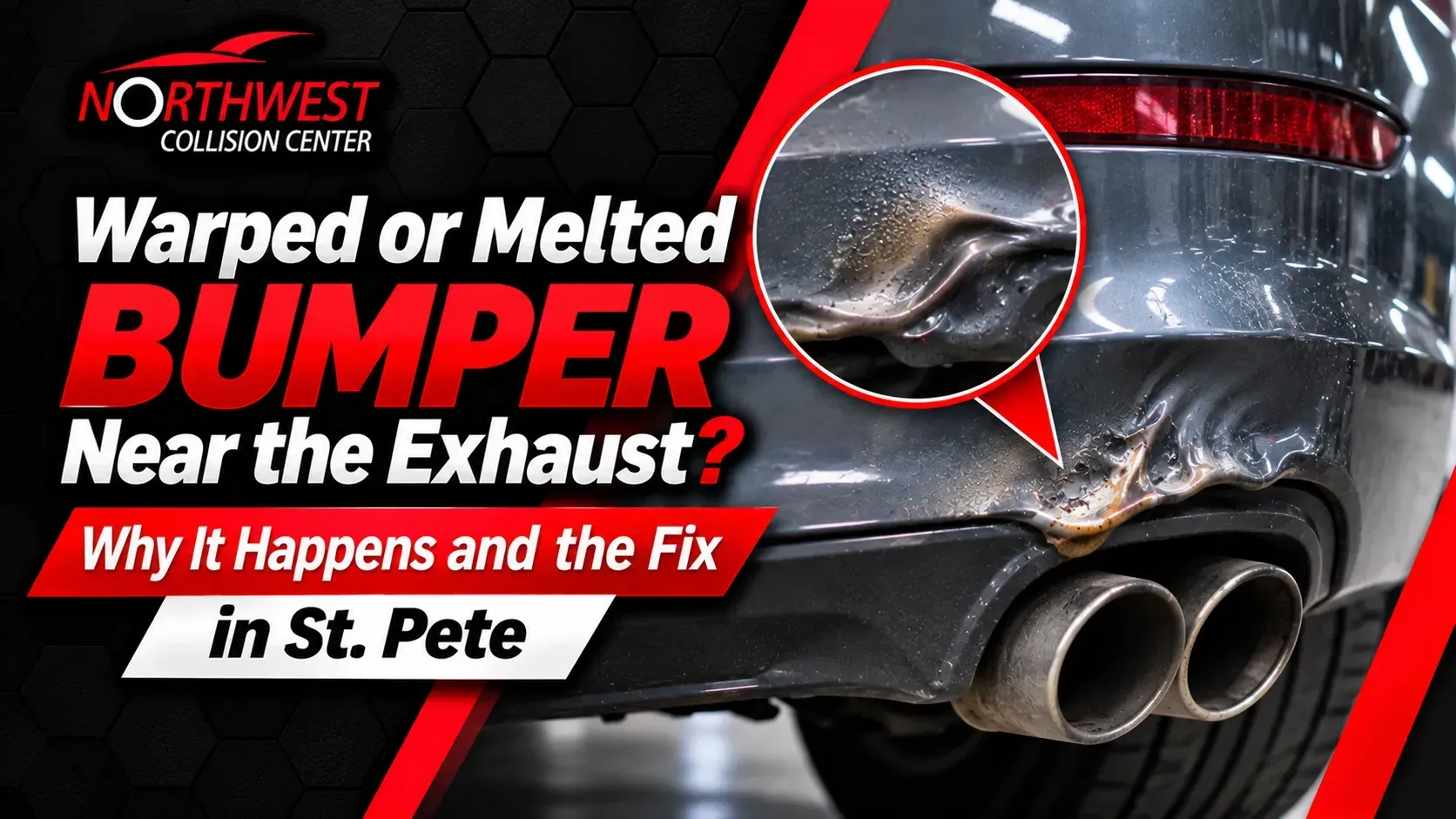
Heat damage near an exhaust opening is different from a parking scrape or ordinary sun fade. A warped bumper near exhaust parts often curls inward, sags, bubbles, turns glossy, or develops brown and black marks around the outlet.
Modern bumper covers are often flexible thermoplastic. Direct contact or concentrated exhaust flow can soften this material, change its shape, and make it brittle.
Signs Heat Is the Cause
Heat damage often follows the exhaust opening. Look for a burning-plastic smell, ripples, soot, blistered paint, or a growing gap near the trim.
Impact damage may instead leave cracks, broken tabs, scuffs, or uneven gaps. A cracked bumper may need attention to both the cover and hidden parts.
Why Exhaust Heat Damages Bumper Plastic
Exhaust heat damages a bumper when hot gas or metal gets too close to the cover. The root cause may be a fit problem, failed support, collision movement, or a mechanical issue that raises exhaust temperature.
Tailpipe Position or Incorrect Exhaust Fit
A tailpipe installed too high, too far inward, or at the wrong angle can aim heat at the bumper. An oversized aftermarket tip can do the same. Repeated hot airflow may discolor paint and soften plastic without direct contact.
Clearance varies by vehicle, so a technician should use the maker's repair information instead of assuming one universal gap.
Broken Hangers or Collision Movement
Hangers and brackets keep the exhaust from swinging into the bumper. If one tears or bends, the outlet may shift as the vehicle moves.
A rear impact can also move the bumper, exhaust, heat shield, or mounts. This can follow a low-speed crash on Tyrone Boulevard or a parking contact near the Gulf beaches.
Excessive Exhaust Temperature
An engine or emissions fault can make the exhaust run hotter than normal. Warning lights, rough running, or a strong odor may point to a misfire, fuel-control fault, or catalytic converter problem.
Those conditions require mechanical diagnosis before body repair. Do not alter emissions parts to create clearance; Florida rules for motor vehicle air-pollution equipment address tampering with installed controls.
Florida Heat Can Worsen the Damage
St. Petersburg sun does not normally melt an intact bumper by itself. Hot surfaces, long idling, and slow I-275 traffic can add stress when exhaust clearance is already poor.
UV exposure also ages paint and plastic. Coastal humidity and salt air can affect hardware, so the inspection should cover brackets, hangers, shields, and fasteners.
Can You Keep Driving With Heat Damage?
Stop driving if the bumper is smoking, touching the exhaust, hanging loose, or close to a tire. Cabin exhaust odor, rough running with a warning light, or glowing exhaust parts also call for towing.
Minor discoloration without smoke, contact, loose parts, or drivability symptoms may allow a short trip for inspection. Avoid idling and remember that cabin exhaust odor is never merely cosmetic.
How the Problem Is Diagnosed
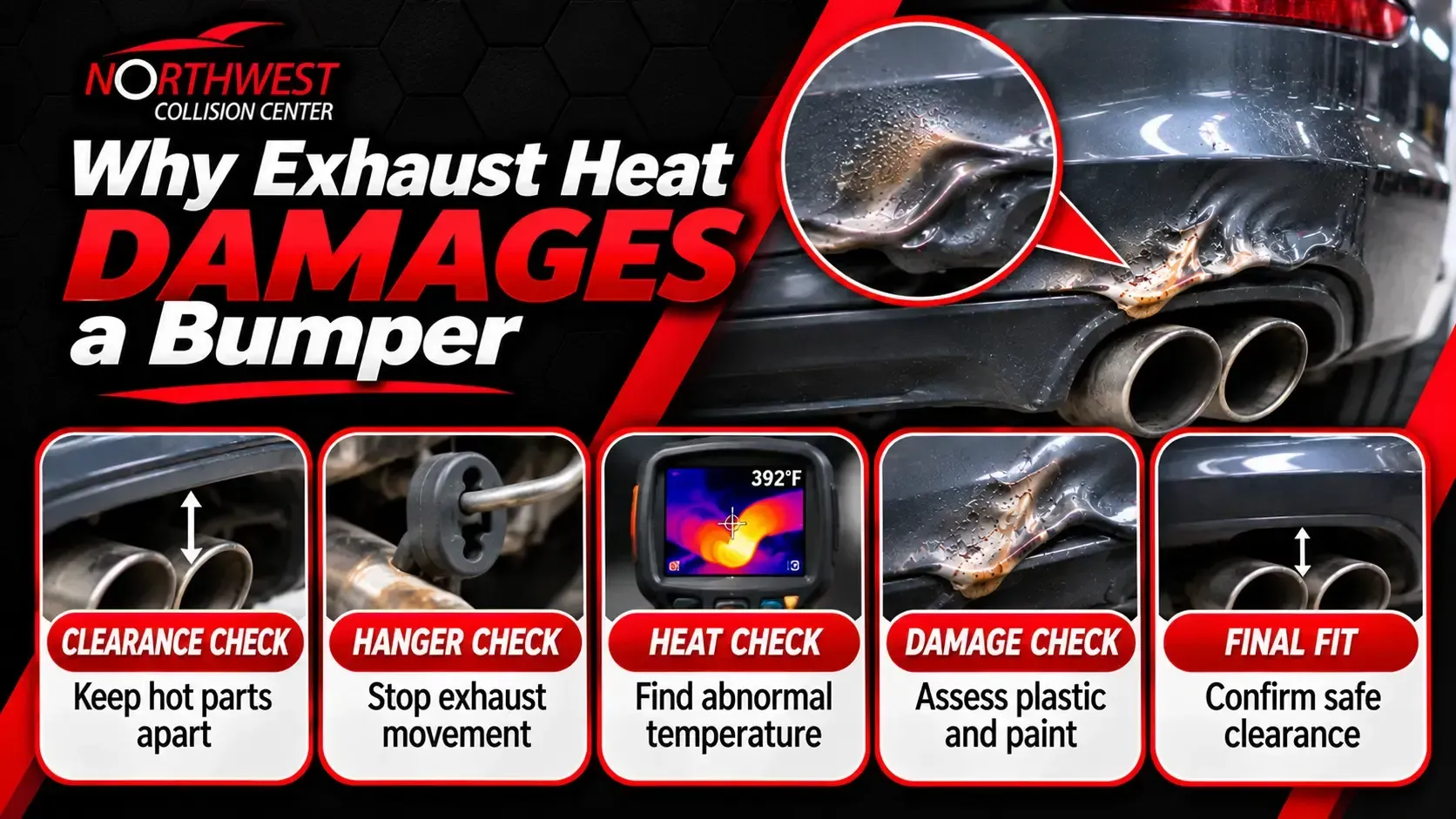
A proper diagnosis identifies the heat path before choosing a bumper repair. The inspection covers exhaust movement, shields, body fit, plastic, mounts, and nearby sensors.
Check the Root Cause First
First, confirm whether the outlet is aimed correctly and remains stable. A mechanical or exhaust specialist may need to replace a hanger, correct the installation, or diagnose abnormal heat.
Once the heat source and clearance are corrected, bodywork can proceed without exposing the new finish to the same conditions.
Inspect the Bumper and Hidden Parts
The cover may need removal so its inner surface, tabs, absorber, wiring, and sensor mounts can be checked. Heat can weaken plastic that still looks acceptable from several feet away.
This inspection shows whether a collision changed the exhaust opening. Mazda owners can ask our Mazda repair specialists to assess brand-specific body fit.
Repair or Replace the Damaged Bumper?
Repair may work when damage is limited and the plastic remains sound. Replacement suits a cover that has lost its shape, strength, mounts, or usable surface.
When Repair May Be Possible
A small, shallow distortion may be reshaped if the material is not burned, brittle, deeply rippled, or stretched. The cover still needs stable mounts and safe exhaust clearance.
An automotive refinishing service may restore the appearance after the plastic is judged repairable. Paint alone cannot correct softened material or ongoing heat exposure.
When Replacement Makes More Sense
Replacement is often appropriate for charred plastic, severe warping, torn mounts, repeated damage, or distortion around sensors. The estimate should also cover affected brackets and shields.
A melted rear bumper repair may include a new cover, hardware, refinishing, and alignment. The plan depends on inspection findings and any exhaust work needed first.
How We Restore Fit and Finish
After the heat source is corrected, we restore the bumper's shape, attachment, gaps, and finish. A replacement cover is test-fitted before painting so the opening and trim align correctly.
Our digital color matching process accounts for the vehicle's current finish. We verify outlet clearance, bumper stability, trim fit, and the repaired surface. This supports bumper repair in St. Petersburg, FL, that addresses the damage and its cause.
Takeaways
A melted or warped area near the tailpipe points to excess heat, poor clearance, exhaust movement, or impact misalignment. Florida sun can add stress, but it is rarely the only cause. Stop driving for smoke, contact, loose parts, rough running, or cabin exhaust odor.
The lasting fix begins with the heat source. Then the bumper can be repaired or replaced, refinished, aligned, and checked for safe clearance.
Frequently Asked Questions
Can a hot exhaust melt a plastic bumper?
Yes, hot exhaust can melt a plastic bumper when the outlet or heated metal sits too close to the cover. Direct contact, concentrated exhaust flow, or excessive exhaust temperature can soften, discolor, and deform the plastic.
Why did my bumper melt after exhaust work?
Your bumper may have melted because the exhaust outlet changed position or clearance during the work. A replacement pipe or tip can alter its height, depth, or angle. The exhaust installer should then check the fit, hangers, movement, and heat shields before bumper repairs begin.
Can a warped bumper be reshaped?
Yes, a mildly warped bumper can sometimes be reshaped if the plastic remains flexible and structurally stable. Burns, deep distortion, or severe heat damage may prevent the plastic from holding its original shape. A technician should inspect the bumper material and mounts before reshaping it.
Will paint fix exhaust heat damage?
No, paint alone will not fix exhaust heat damage to bumper plastic. The heat source must be corrected, and the cover may need reshaping or replacement before primer, color, and clear coat are applied.
How much does melted bumper repair cost?
The cost depends on the size of the damaged area, the bumper material, hidden damage, paint work, parts, sensors, and the exhaust correction required. An in-person inspection provides a more useful estimate than a price based only on a photo.
Schedule a Bumper Heat-Damage Inspection in St. Pete
If you notice a melted bumper near exhaust parts, let our shop inspect the cover, mounts, fit, and heat path. We can explain whether repair or replacement fits the damage and when an exhaust specialist should correct the cause first.
Contact Northwest Collision Center at (727) 347-8945 or request an inspection at 3301 Tyrone Blvd. N., St. Petersburg, FL 33710. We will help you plan the bumper work after the source of the heat is addressed.

Greg Descent
The proprietor of Northwest Collision Center, boasts a remarkable journey in the auto repair industry. Originating from Hamilton, Ontario, Canada, Greg spent his formative years in California, where he cultivated a deep passion for automotive work.
In 1996, he seized the opportunity to acquire Northwest Collision Center, a reputable establishment founded in 1959 and situated on Tyrone Boulevard for over five decades. Greg's hands-on approach and dedication to the business have been pivotal since he first joined the team. Under his leadership, Northwest Collision Center has continued to thrive, maintaining its legacy of excellence and commitment to quality service in the automotive repair sector.
Discover More On:
