Each year, the electric motor vehicle market grows more and more. This is largely due to the continued increase in the price of oil as well as numerous environmental campaigns. A lot of customers now own electric motor vehicles and many more have taken an interest in purchasing one. Because of this increasing demand for electric motor vehicles, numerous innovations and inventions have also cropped up in the electric automotive field.
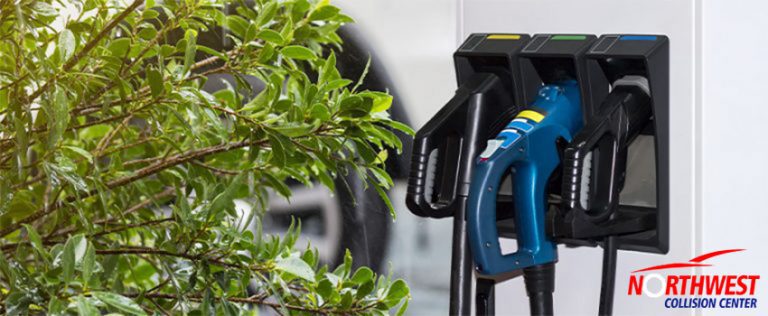
Obviously, one of the products most affected by these new innovations are the electric charging systems. Companies have been striving to develop new EV chargers that are more efficient and easy to use. As such, these new changes could render your old charging systems obsolete and incompatible with the latest charging stations, or worse, with the electric motor vehicle itself. This means that when you buy an EV charger or do an EV home charger installation, you have to make sure that they are future proof so they don’t become obsolete when new technology comes out.
Tips to Remember When Choosing Your Electric Car Charger
Go for Modular Chargers
With modular electric car chargers, you don’t have to throw away the whole system whenever there is an upgrade or a component needs to be changed. Modular EV chargers ensure that they will be used for a long time since they are designed to allow you to upgrade or replace specific parts as needed rather than change your EV charger all together. With a modular EV charger, you can easily upgrade your kW output or replace a part that needs to be changed.
Go for a Charging Point with High Charging Capacity
You might want to buy a home charging point with a 22kW capability. Most homes only charge at 7kW because they are run on a single-phase power supply. However, once you move to a three-phase power supply, the latter runs at 22kW. The good thing about choosing a 22kW capability is that even if you are only charging at 7kW, your cable and unit would still be working perfectly since they are within their maximum limits, making them last longer and preventing them from being overloaded. In fact, a charging point with a 22kW capability would be able to support 3.7kW, 7kW, 11kW and 22kW. Unlike those with lower capabilities, which cannot handle higher power supplies, a 22kW capability allows you to support those with lower power capabilities.
By choosing a 22kW capability for you charge point, you will be ready in case three-phase power supply becomes the standard in the future. Even if you will not be currently using it at full capacity, you won’t need to change it anytime you plan to upgrade to a higher-capacity power supply.
Pick a Smart and Durable EV Charger
Through a smart charging system, your electric motor vehicle, your charger and your charging point are able to share data connection. As such, you will be able to measure and manage the energy usage remotely. Now isn’t that convenient? Not only that, a smart EV charger also has new features including automatic unplugging once your electric motor vehicle becomes fully charged. A smart charging system is future proof as it will allow you to simply add new features to old existing charging stations.
In line with this, you also have to make sure that your electric car charger is made with strong and durable materials. This will ensure that your EV charger will not easily break and will last for a very long time.
Buy Your EV Charger from Innovative Brands
By buying from innovative brands, you can be sure that your EV charger is the latest technology in the market, meaning it will be a long time before it becomes obsolete. Further, innovative brands can also come up with ways to improve and integrate older systems to make them compatible with newer technologies. Either way, you can be sure that your EV charger will be compatible with your electric vehicle and charging system.
Electric motor vehicles are the future of the automotive industry. As such, it might be wise to start investing in one instead of the traditional motor vehicles that run on fuel. Should you need any help with your electric motor vehicle, your electric car charger or installing your EV charger at home, you can give us a call at Northwest Collision Center or drop by our shop and we would be very happy to assist you! We are Tesla-approved and one of the best auto body repair shops in St. Petersburg, FL!