Fixing a small dent is made easy with paintless dent repair.
If you have been in a minor accidental scrape or have been caught off-guard during hail season, your heart may have skipped a beat. But, with today’s technology and improving methods, all sorts of remedies already exist.
Most automotive paints are already designed to be resilient. These days, it is not unusual to see undamaged paint surfaces despite an impact made against it. When the dent is shallow and did not affect the paint itself, one of the most effective methods of dealing with it is paintless dent removal.
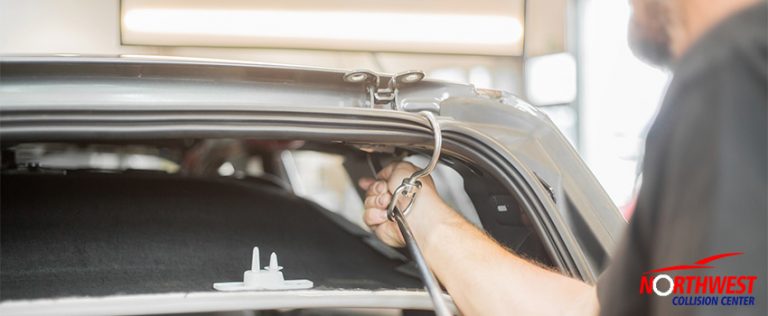
What is paintless dent repair? As the name implies, it repairs the dent without using paint or body filler. The technique works by squeezing out the affected dent. By accessing the back side, the technician provides a slow, consistent, massage-like pressure to put back the dent into its original position.
Benefits of Paintless Dent Repair
Is it really worth fixing just fairly small dents in your car? Yes, it is! We will tell you why.
1. Prevents Costly Repair
Neglecting the smallest dent could lead to costly repairs later. When you begin to think that it is just small, think of what could happen if the dent worsens. What if it gets rusted, or your paint gets damaged? It will only cost you a lot more. Take care of the issue while it is still small, otherwise, it could be burdensome to manage.
2. Retains Value
Paintless dent repair restores your car back to its pre-accident condition. It will not alter the original look as it does not use any body filler and paint. Technicians use specialized tools to put it back into shape without causing any harm or modification to your car. With retained car value, you get the most out of it.
3. Saves Time
You do not need to wait for a long repair time. Paintless dent removal for small and few dents only requires few hours to a day in order to get things done. There is no need to repaint the car thus the time spent is lower compared to the traditional dent repair service. You will be able to get back to business as soon as possible.
4. Saves the Environment
Choosing the paintless way enables you to be kind to the environment. The procedure itself does not need to release harmful chemicals that contaminate groundwater. It likewise reduces your carbon footprint.
5. Insurance Claim
When done by professionals, many insurance companies cover up the cost of the dent repair. This only means that you get to save money as well.
Is DIY Dent Repair Feasible?
The method seems fairly easy and fast. Can you do it on your own?
The technicians are trained to do the repairs efficiently and fast. The process involves going to the damaged area, gaining access to the panel, and applying enough amount of pressure from the outside to make the dent go back in place. The outside pressure is needed to ensure that it will not over-correct and push the dent too far. The whole process requires the use of special tools and expertise on how to use it.
While there are tutorials widely spread over the internet, for those who are not experts in getting things done the way the professionals do it, you might end up getting things worse. Running the risk of causing more harm, you could easily damage the body and the paint. By experimenting with the pressure you need to give against the dent, you might push it too far, ending up with a mountain of stretched metal. When this happens, you would need to replace the panel. Sounds costly, right?
Is it worth it to try on your own? Of course, not. Your insurance company would not cover up the cost should you need professionals to fix the damage.
Call Northwest Collision Center Today!
Having been in the business for more than 60 years and i-Car Gold certified, you are assured that your car is in good hands!
Whatever repair your vehicle needs, NCC is here for you. We are a trusted auto body repair shop in St Petersburg, FL, and have serviced thousands of vehicles. Our team is composed of highly-skilled technicians paired with our state-of-the-art equipment that get things done fast and efficiently. We provide excellent customer service and guarantee immediate completion and lifetime warranty on the repairs we do!
Should you need expert help, reach out to us or visit our location, and we will thoroughly assess what repair your vehicle needs!