A Guide to Tesla Safety Features for Florida Drivers

A red Tesla car running on a road

If you own a Tesla or you are thinking about getting one, you already know they are packed with advanced technology.

Beyond the smooth electric power and sleek design, Tesla puts a huge emphasis on safety, from preventing crashes to protecting you if something goes wrong. Understanding how these safety systems work helps you enjoy the drive and know what to expect if you ever need Tesla auto body work after an accident.

Working with knowledgeable Tesla safety repair experts also matters because many of these features need proper calibration and careful repairs to keep doing their job.

Key Takeaways

  • Tesla’s safety is built around active safety, passive safety, and emergency response.
  • Features like Autopilot, collision warnings, and automatic emergency braking help reduce driver error.
  • Lane-keeping and traffic-aware cruise control support safer, less stressful highway driving.
  • Tesla vehicles include protections and alerts designed to keep you safer during and after a crash.
  • After a collision, choosing a shop that understands Tesla’s systems helps keep these safety features working correctly.

Tesla’s Three-Part Approach to Safety

Tesla designs safety around three core pillars:

  • Active safety, which helps prevent crashes in the first place.
  • Passive safety protects you if a crash does happen.
  • Emergency safety, which supports you and first responders after an impact.

All of the high-tech systems in your car, from cameras to sensors, are working together behind the scenes every time you drive.

Active Safety Features That Help Prevent Crashes

Before any impact happens, your Tesla is constantly watching the road for you. Many of these protective systems run in the background, quietly stepping in when you need them most.

Autopilot Driver Assistance

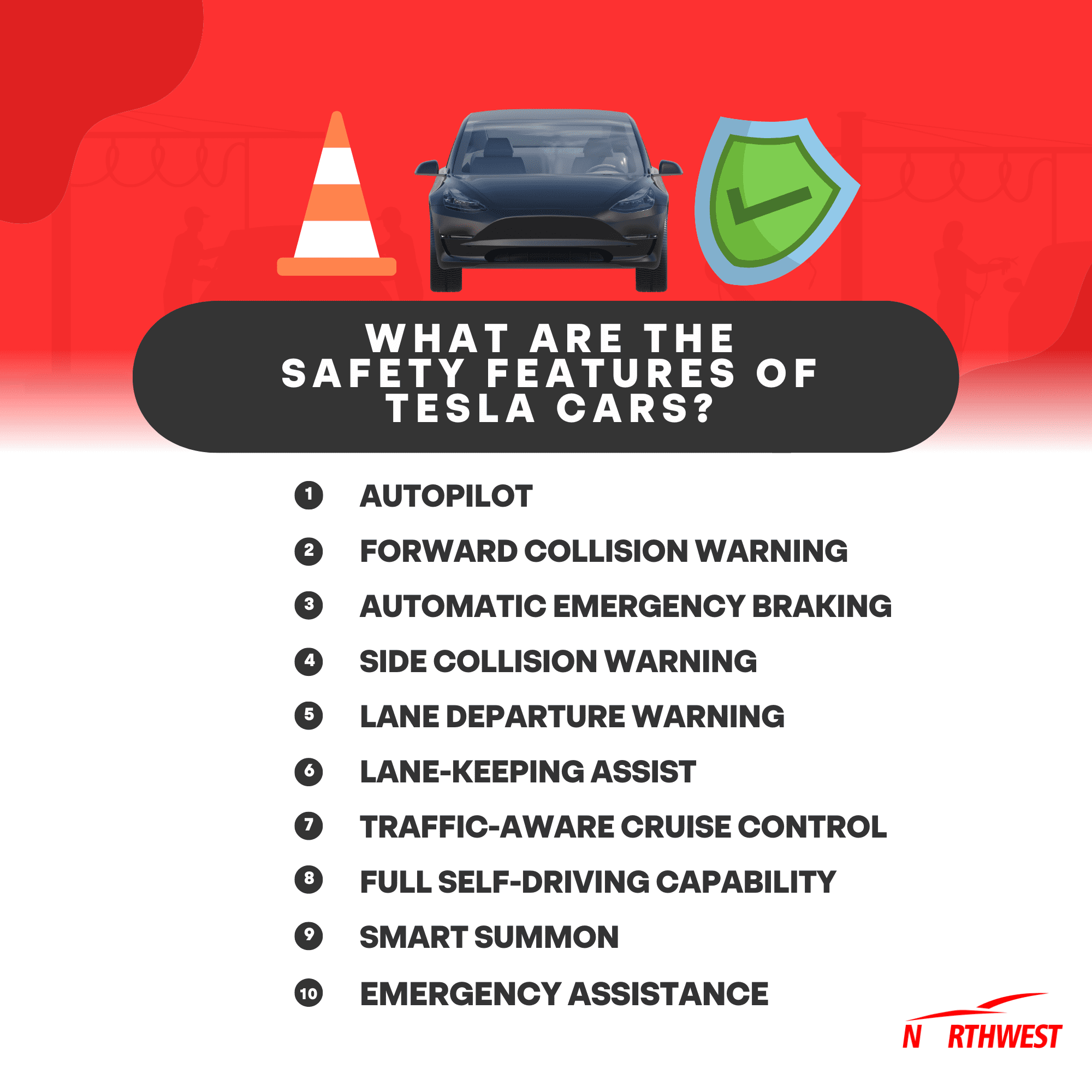
Autopilot is one of the most recognized Tesla car safety features. It uses cameras, radar, sensors, and onboard computers to assist with:

  • Steering within the lane
  • Adjusting speed to match traffic
  • Braking when vehicles ahead slow down

It is a driver-assist system, not a replacement for an attentive driver, but it can greatly reduce fatigue and certain kinds of human error.

Forward Collision Warning and Automatic Emergency Braking

Tesla’s Forward Collision Warning monitors vehicles, pedestrians, and obstacles ahead. When the system detects a likely collision, it can:

  • Alert you with visual and audio warnings
  • Give you time to react and brake
  • Work with Automatic Emergency Braking if you do not respond in time

Automatic Emergency Braking can apply the brakes on its own to reduce impact speed or, in some cases, avoid the collision entirely.

Side Collision Warning and Avoidance

Side Collision Warning uses sensors to watch traffic around you, including blind spots. If a nearby vehicle is about to move into your path, the system can warn you.

On some models, Side Collision Avoidance can gently adjust steering to help move the car away from the threat, adding a layer of protection in tight traffic situations.

Lane Departure Warning and Lane-Keeping Assist

Cameras monitor lane markings to help you stay on track. If the vehicle drifts out of its lane without a turn signal, Lane Departure Warning alerts you so you can correct course.

If you do not respond, Lane-Keeping Assist can apply a subtle steering input to guide the vehicle back into the lane, reducing the risk of sideswipes or roadway departures.

Traffic-Aware Cruise Control

Traffic-Aware Cruise Control maintains both a set speed and a set distance from the vehicle in front. It can:

  • Automatically slow your Tesla when traffic backs up
  • Accelerate again as traffic clears
  • Smooth out speed changes for a more comfortable ride

This reduces stop-and-go stress and helps keep following distances more consistent and safer.

Advanced and Convenience Safety Features

Some Tesla systems focus on convenience but still play an important role in safety when used correctly.

Full Self-Driving (FSD) Capability

Full Self-Driving Capability is still an evolving feature. Even when equipped, today’s Teslas are not fully autonomous, and you must stay alert, with hands on the wheel and eyes on the road.

Over time and with regulatory approval, FSD aims to handle more driving tasks on its own. Until then, think of it as advanced driver assistance, not a substitute for a human driver.

Smart Summon and Low-Speed Parking Safety

Smart Summon allows your Tesla to navigate a parking lot at low speed to come meet you within a set distance, which can:

  • Reduce time spent walking through busy parking areas
  • Lower exposure to tight, crowded spaces around moving vehicles

Used correctly and with close supervision, this feature can add a layer of convenience and situational safety.

Passive Safety and Emergency Protection

Even with the best driver assistance, accidents can still happen. Tesla designs passive safety and emergency systems to reduce the effects of those rare events.

Strong Structure and Battery Protection

Tesla vehicles use a rigid passenger cell, crumple zones, and a low-mounted battery pack. This layout helps:

  • Absorb and redirect crash forces away from occupants
  • Lower the center of gravity, which reduces rollover risk
  • Spread heat away from the cabin in the rare event of battery damage

These design choices are a big part of why Teslas perform well in crash tests.

Airbags and Restraint Systems

Multiple airbags, seatbelt pretensioners, and other restraint systems are carefully tuned to work with the vehicle’s structure.

When everything is intact and functioning correctly, these systems help:

  • Reduce injury during an impact
  • Keep occupants better positioned and restrained
  • Work together with crumple zones to manage crash energy

Emergency Assistance

If a serious collision occurs, Tesla’s Emergency Assistance can automatically contact emergency services and share location data. This can speed up response time and help first responders find you quickly, which is especially important in high-speed or multi-vehicle crashes.

Keeping Your Tesla Safe After a Collision

Even with excellent built-in safety, real life still includes fender benders and more serious accidents. When that happens, the way your vehicle is repaired directly affects how well those safety systems protect you in the future.

For collision work or more involved repairs, it helps to compare shops that understand EVs and offer certified EV collision services, especially when sensitive systems and structural components are involved.

If your Tesla’s safety technology has been affected, you want repairs that include:

  • Proper sensor and camera mounting
  • Correct calibration of driver-assistance features
  • Careful work around high-voltage and battery components

When body damage is involved, you also want a team that knows how to integrate quality collision repairs with smart budgeting and quoting. If you are comparing estimates for Tesla auto body repair, clear communication around price, parts, and process makes a big difference.

Northwest Collision Center works with EV owners across the Tampa Bay area, including Tesla drivers, and focuses on high-quality results rather than shortcuts.

Why Tesla Owners Need the Right Repair Partner

Once you understand how much engineering goes into Tesla’s safety features, it becomes clear why your choice of repair shop matters. Repairing and recalibrating these systems is not the same as working on a standard gasoline vehicle.

A quality shop that regularly works on Teslas can:

  • Integrate collision repairs with careful safety system checks
  • Help you understand your options and your insurance coverage
  • Guide you through smart budgeting for long-term vehicle value

If you want a team that takes your safety as seriously as you do, it makes sense to partner with specialists who understand both Teslas and modern repair standards, such as the team that provides Tesla safety repair expert-style guidance and support for EV owners.

At the same time, your repairs benefit from the same structured process used on other modern vehicles, including clear repair plans, staged inspections, and thorough final checks at an established auto body shop in St Petersburg, FL that serves drivers throughout the region.

Frequently Asked Questions

Is Tesla fireproof?

Tesla vehicles are not fireproof, but their battery packs and structure are designed to manage heat and reduce fire risk. In rare cases of damage, the battery pack is engineered to spread heat away from the cabin and help protect occupants.

Historical data from Tesla shows that, per mile driven, Teslas have been significantly less likely to experience a fire than the average gas vehicle.

Even so, any smoke, burning smell, or impact near the battery should be checked immediately by qualified technicians.

Conclusion

Tesla has built its reputation on more than just electric performance; its vehicles blend smart active safety technology, strong crash protection, and thoughtful emergency support to keep you and your passengers safer on Florida roads.

From Autopilot and lane-keeping assist to collision warnings and automatic braking, every drive is supported by layers of software and hardware looking out for you.

When an accident or unexpected damage does happen, those same safety systems need careful, knowledgeable repairs.

Choosing experienced help for certified EV collision services and bodywork keeps your Tesla’s protection and performance where it should be, while a trusted local team helps you navigate quotes, insurance, and timelines.

Northwest Collision Center proudly serves Tesla and other EV owners as a trusted part of the wider City of St. Petersburg community and the surrounding Clearwater and Largo areas, keeping modern vehicles safe, road-ready, and looking their best.

Schedule your Tesla repair today.

Picture of Greg Descent

Greg Descent

The proprietor of Northwest Collision Center, boasts a remarkable journey in the auto repair industry. Originating from Hamilton, Ontario, Canada, Greg spent his formative years in California, where he cultivated a deep passion for automotive work.

In 1996, he seized the opportunity to acquire Northwest Collision Center, a reputable establishment founded in 1959 and situated on Tyrone Boulevard for over five decades. Greg's hands-on approach and dedication to the business have been pivotal since he first joined the team. Under his leadership, Northwest Collision Center has continued to thrive, maintaining its legacy of excellence and commitment to quality service in the automotive repair sector.

On Trend

Most Popular Stories

What Is the Structural Integrity of a Car?

The structural integrity of a car is all about its ability to withstand forces and impacts without sacrificing safety or performance. It involves the strength of the unibody frame, materials used, and construction techniques.