A sturdy and sleek bumper is not just a matter of aesthetics, but also a matter of protection.
Chances are, you came here because there is a scratch on your bumper and you are wondering whether to ask your trusted auto body repair shop for a simple repair of bumper or go all out and do bumper replacement.
Well, you come to the right place. We have dealt with all types of bumper defects and learned the safest and right way to resolve them.
Let this comprehensive list help you decide which of these commonly encountered defects require bumper repair or replacement.
Why Maintain Your Bumper
All elements of your car, from the tiniest screws to the heavy tires, are designed to ensure your safety. This applies to your car bumper as well.
Bumpers are positioned in the front and back of your car to absorb impact in events of a car collision. Apart from that bumpers also protects components in your car that can easily be damaged such as the:
- Car lights (i.e. fog light, license plate lights, headlights and turn signals)
- Warning sensors (i.e. parking sensors, airbag sensors, backup sensors, vehicle lane changing sensors, etc. )
- Car body molding and protective molding
Regardless of how small the dent or how big the impact is on your bumper, it should be fixed right away. Any damage on your bumpers should be assessed by auto body repair experts to keep you safe from possible dangers on the road.
Now let us proceed to determining when to repair or replace your bumper. But if you are still new to automotive and auto body repair, it is best to let professionals check the damages in your car.
Is Bumper Repair Service a Right Choice?
Before spending money on doing bumper replacement, you may want to check this list first and see if you can opt for fixing and repair first. Here are some cases where a bumper can be easily repaired.
Minor Bumper Cracks
All car owners know that a crack in the bumper is not breaking news. A cracked bumper can not fully provide the protection you need.
The reason most auto body experts recommend replacing a cracked bumper instead of repairing them is because of safety issues. But minor bumper cracks can be repaired easily.
If you are still unsure, consult a reliable auto body technician in your area.
Small Bumper Dents
Bumpers are prone to dents. But the good news is they are often repairable. Pulling out and repairing a small bumper, usually a few inches in size, dents are often covered in any bumper repair service.
Minor Paint Scratches
Surface level scratches on your car can be easily managed. They can be resolved even without the need of expensive equipment- just a little know-how from reliable sources or let your trusted auto body repair service restore your car’s natural glaze.
Is Bumper Replacement Service a Right Choice?
In other cases, the safest and economical way to resolve the damage to your bumper is by replacing them. Here are a few instances where you should replace the entire bumper instead.
Large Bumper Cracks
While small holes or cracks on your bumper can be resolved using epoxy and a fiberglass repair kit, larger ones often require extensive repair. But this type of repair uses more complex tools thus, is more expensive.
If you want to ensure the structural integrity of your bumper, instead of a bumper repair, you should opt for bumper replacement since it is safer and more economical.
Widespread Bumper Dents
Dents in your car can be easily overlooked. But any dents on your bumper, regardless of its size, can compromise your car’s structural integrity. This also means compromising your own and your family’s safety.
While some dents can be fixed without the need for bumper replacement, there are instances that dents on your bumper are so large that simply tightening and pouring hot water is not enough.
If you have widespread dents on your bumper, the safest and most logical decision is to bring your car to an auto body repair shop for bumper replacement.
Major Paint Damage
Small paint damages on the surface of your bumper are sometimes cosmetic issues that can be patched up easily. However if your entire bumper is covered in deep scratches and scrapes, repairing them is a lot of work.
Rather than going through the whole process of sanding down, leveling and repainting your bumper, replacing it with a new bumper is more beneficial.
Loose/Broken Hooks
If you are wondering what is preventing your bumpers from coming off while driving, it is the hooks that safely adhere them to your car’s valance panel, grill and splash guard. Once broken, you may need to replace them including the rest of your bumper.
Any damaged or broken hooks cannot be resolved by replacing the hooks alone. It will require a full bumper replacement before going safely on the road. If you notice your falling loose that you need to push it before getting inside your car, then contact your nearest bumper repair service and have your hooks replaced right away.
After Major Accidents
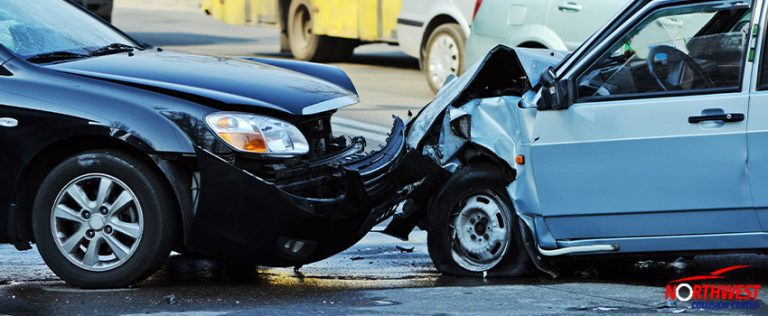
Movie stunts often deceive to thinking that a car can still run properly after rolling off a cliff. After encountering a major accident and your car appears intact, there may be underlying damages to the frame of your that needs to be checked as soon as possible.
The only way to find those hidden bents or cracks to remove the bumper. To ensure safety, reusing bumpers with damaged frames should be avoided.
Driving without a Bumper is Dangerous
Thinking of just pulling off your damaged bumper? Remember that driving without a bumper is considered unsafe and illegal.
If you need help with your damaged bumper, Northwest Collision Center is here to offer you quality bumper repair service. Our trained team are equipped with advanced technologies to ensure your safe and smooth travel on the road.
If you are in Florida and you do not want to drive with a damaged bumpers, search “bumper repair near me” in your map and look for our auto body repair shop in St. Petersburg, FL.