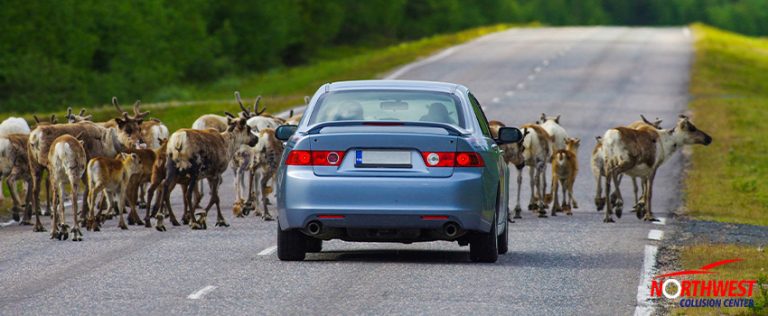
Various scenarios contribute to the total number of road accidents in the entire United States. Some of which are car collisions that involve wildlife. These situations can cause minor or extensive damage to cars, which necessitates car collision repair. They can also be a source of injuries and, in worst-case scenarios, fatalities.
If you reside in the Sunshine State, this might not be the first time you’ve heard about this. We’ve gathered some information so that you know what to do if you get involved in a road accident with animals.
Animal-Vehicle Collision Statistics
In June 2020, an alligator crossing the road caused a car crash in Manatee County. ABC Action News reports that the 20-year-old driver tried to avoid the alligator, so the car crashed into a tree.
According to the animal-vehicle collision statistics from State Farm, one in 306 car collisions in Florida involves hitting animals and wildlife. Most of these animal-related car accidents happen between October and December. The statistics also show that this year saw an increase in the number of animal collisions.
There had been an estimated 38,800 collision car insurance claims from July 2019 to June 2020, while an estimated 50,800 collision car insurance claims from July 2020 to June 2021. Based on these numbers, there was a 30% increase in car insurance animal collision claims in Florida. These numbers also serve as a reminder to drive cautiously.
Car Insurance Animal Collision Coverage
If you’ve recently been involved in an animal-related car collision or are concerned about what to do in case you encounter it, the best course of action is to bring your car to a trusted repair shop. There might only be some minor dents or scratches on the outside, but that doesn’t mean there isn’t any internal damage. To stay safe on the road, you need to call for car collision repair services.
To answer the question, “Does car insurance cover animal-related collisions?” some do, and some don’t. Here are the different types of car insurance:
- Liability Coverage
- Collision Insurance
- Comprehensive Insurance
- Uninsured Motorist Insurance
- Underinsured Motorist Insurance
- Medical Payments Coverage
- Personal Injury Protection Insurance
- Gap Insurance
- Towing and Labor Insurance
- Rental Reimbursement Insurance
- Classic Car Insurance
Of all these types, comprehensive insurance is one of the best collision car insurance to get to be sure in case unwanted incidents, such as animal-related crashes, happen.
Many drivers think that collision insurance has animal collision coverage. However, most don’t cover damages caused by animals. To ensure you’re covered, get comprehensive insurance too.
Most comprehensive insurance have animal collision coverage. This automobile insurance covers damages brought about by animals, natural phenomena, vandalism, break-ins, collapsing structures, or other unpredictable incidents.
With animal collision coverage included in the insurance package, you can have the assurance that you’ll get assistance if you encounter animal-related car crashes in the future.
Tips to Avoid Animal-Related Car Accidents
Now that you know what collision car insurance to get, we’ll give you some tips to avoid or minimize the impact of animal-related car accidents.
1. Don’t panic.
When you see an animal on the road, you need to stay calm regardless of the species. Doing so can help you think clearly of what to do next. With a plan in mind, you can prevent accidents and injuries.
2. Evaluate the situation.
If an animal suddenly dashes across the road, observe your surroundings for a few seconds. Keep in mind that swerving is not always the best option. In some cases, it can even cause more harm than good.
3. Slow down as much as possible.
When you see an animal from a few meters away, reduce your speed. If there are no cars behind you, consider stopping for a moment until the animal leaves or crosses the road. Don’t step on the brakes too hard. It may cause your car to skid, resulting in an accident.
4. Steer towards the outer edge of the direction where the animal approaches.
Doing so may encourage it to move faster or cross the road immediately.
5. Consider driving back if you encounter an aggressive animal.
This minimizes damage and car collision repair costs. Some animals, such as deer, tend to bust cars’ windshields, so don’t go near them as much as possible.
Northwest Collision Center Provides Car Collision Repair Services
If you get involved in an animal-related car crash, Northwest Collision Center is here to help you. Our auto body technicians provide top-notch car collision repair services to restore cars to their pre-damaged condition. We are experienced and knowledgeable when it comes to conducting diagnostic tests to see which parts of your car need repair. Having been in the business since 1959, we guarantee accurate and precise repairs at our auto body repair shop in St. Petersburg, FL. For inquiries about our services, don’t hesitate to give us a call today!