
Finding a trustworthy and reliable auto body repair shop is a crucial step in ensuring your vehicle is adequately taken care of. If you’re in Largo, FL, several auto body repair shops claim to provide premier services. However, not all of them deliver on their promises. To ensure you don’t get ripped off, it’s essential to have a good understanding of your car damage and know what to look for in a reputable repair shop.
Identifying Car Damage
Car damage can occur due to various reasons, such as accidents, collisions, hailstorms, or even minor scratches and dents. Identify the extent of damage before going to an auto body repair shop in Largo, FL. Here are a few things to consider:
- Visible Damage: Take a quick look for any signs of damage, like dents, scratches, or panels that don’t line up. Take note of the location and severity of the damage. Deeper scratches that gouge through the paint layer or dents with sharp creases likely require professional attention to ensure a smooth, factory-like finish. Even minor scratches can be unsightly and might compromise the car’s value if addressed.
- Functionality: Check if any of the car’s functionalities have been affected. This includes lights, windows, doors, and the overall performance of the vehicle. Misaligned doors might indicate frame damage, a more severe issue requiring specialized equipment and expertise to rectify. Pay attention to any unusual sounds, vibrations, or difficulty steering, as these could be signs of underlying damage.
- Underneath Inspection: Examine the undercarriage of the vehicle for any signs of damage or leakage. This is especially important if you were involved in a collision. Look for cracks, dents, or bent components that could affect the car’s handling and safety. Fluid leaks could indicate damage to the radiator, oil pan, or other vital elements. If you need more time crawling under your car, have a trusted mechanic or a professional at an auto body repair shop in Largo, FL, perform a thorough inspection.
Understanding the Different Types of Car Damage
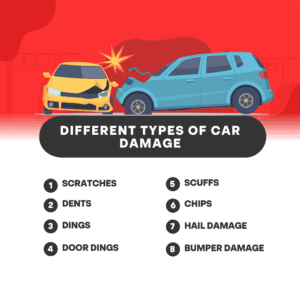
Beyond the initial assessment, familiarizing yourself with the various types of car damage can help you determine the severity and potential repair needs. Here’s a breakdown of some commonly encountered issues:
- Scratches: These are superficial markings on the paint layer, ranging from minor evident coat scratches that might be buffed out to deeper gouges reaching the base coat, requiring professional paint touch-up or even a full panel repaint.
- Dents: These are inward deformations of the body panel caused by impacts. The severity can vary from shallow indentations that might be addressed with Paintless Dent Repair (PDR) techniques to deep creases requiring panel replacement.
- Dings: Similar to dents but typically more minor and less noticeable. PDR is often a suitable repair option for minor dings.
- Door dings: Specific dents or dings on car doors, often caused by a careless car door opening in parking lots. Depending on the size and depth, PDR or traditional panel repair techniques might be necessary.
- Scuffs: These are superficial marks or scrapes typically caused by rubbing against another object. Minor scuffs might be buffed out with a polishing compound, while deeper scuffs require repainting the affected area.
- Chips: Small missing pieces of paint that expose the underlying metal. Left unaddressed, chips can lead to rust, compromising the car’s aesthetics and potentially its structural integrity. Prompt repair with touch-up paint or professional refinishing is recommended.
- Hail damage: Dents are caused by hailstones and often appear in clusters across the car’s roof, hood, and trunk. PDR is a popular option for hail damage repair, as it’s a less invasive and more cost-effective method compared to traditional panel replacement.
- Bumper damage: Damage to the front or rear bumpers, ranging from minor scrapes that might be addressed with plastic repair techniques to cracks or complete detachment, requiring bumper replacement.
Understanding the type of damage and its potential repair options empowers you to have a more informed conversation with auto body repair shops in Largo, FL, and avoid unnecessary repairs or inflated costs.
Tip: When assessing damage, take pictures from various angles and distances for reference when talking to auto body repair shops. Clear and detailed photos can help technicians provide a more accurate repair estimate.
Do-It-Yourself (DIY) vs. Professional Repairs
For minor cosmetic issues like shallow scratches or minor scuffs, attempting a DIY fix might be an option. There are many car care products available, including scratch-removal compounds and touch-up paint, which can help with minor imperfections. However, for most car body damage, significantly when the integrity or safety features might be compromised, seeking professional help from a reputable auto body repair shop in Largo, FL, is highly recommended. Here’s why:
- Expertise: Skilled technicians know precisely how to spot the problem and suggest the best way to fix it. They can identify potential underlying issues that a layperson might miss, ensuring a complete and lasting repair.
- Tools and Equipment: Auto body shops possess specialized tools and equipment necessary for proper repairs. This includes dent pullers, welding equipment, spray booths, and frame straightening machines. The use of appropriate tools and techniques results in a high-quality finish and long-lasting results.
- Safety Considerations: They can identify potential safety hazards associated with the damage and ensure repairs restore the car’s structural integrity. For example, a seemingly minor dent near a car’s pillar, a critical structural component, could require more extensive repairs than initially apparent. Professionals can assess the damage and ensure a safe and structurally sound repair.
- Warranty: Reputable shops typically offer warranties on their repairs, providing peace of mind for your investment. A warranty guarantees the quality of workmanship and protects you in case any issues arise after the repairs are complete.
Tip: If you’re unsure about attempting a DIY repair, always err on the side of caution and consult a professional. When in doubt, it’s best to leave the repairs to experienced technicians to ensure a safe and proper fix.
Need a trustworthy auto body repair shop in Largo, FL?
With numerous auto body repair shops in Largo, FL, choosing the right one is crucial. Here are some tips to guide your search:
- Research and Reviews: Read online reviews and customer testimonials on platforms like Google My Business, Yelp, and the shop’s website to get a sense of the shop’s reputation and customer service. Look for reviews that mention specific aspects like quality of repairs, communication, and overall customer experience.
- Certifications and Associations: When searching for auto body repair shops, look for those certified by industry organizations, e.g., the National Institute for Automotive Service Excellence (ASE). ASE certification indicates that technicians have met rigorous industry standards for knowledge and skills.
- Get Estimates: Obtain written estimates from several shops before making a decision. Ensure the estimates detail the repairs to be done, the parts used, the labor costs, and the estimated timeframe for completion. When choosing a shop, don’t just consider the price; also factor in their reputation, warranty, and overall value.
- Warranty: It is always a good idea to ask about the warranty that is offered on any repairs that you may have done. A good shop will stand behind its work with a comprehensive warranty that covers the quality of repairs and materials used.
- Communication: Choose a shop that clearly explains the repair process and answers your questions patiently and thoroughly. It is crucial to establish trust throughout the repair process by ensuring that customers are comfortable with the shop’s communication style and level of transparency.
By following these tips, you can find a reputable auto body repair shop in Largo, FL, that provides quality repairs at a fair price.
Additional Considerations
Here are some additional points to keep in mind:
- Insurance: In the event of an accident, reach out to your insurance provider first to initiate the claims process. They will likely have a network of preferred auto body repair shops with which they work. Using a shop within your insurance network can simplify the claims process and ensure the repairs are covered according to your policy.
- Payment Options: Ask about the shop’s payment options. Do they accept credit cards? Will they provide financing options for extensive repairs? Knowing the available payment options ahead of time can help you plan your budget accordingly.
- Loaner Cars: When your car is being repaired, some auto body shops offer loaner vehicles for your convenience if you rely on your car for daily transportation.
Conclusion
Understand car damage types and limitations of DIY repairs, and choose an auto repair shop with confidence. Remember, don’t hesitate to ask questions and get clarification from the shop before authorizing any repairs. With a bit of preparation and research, you can find a reputable auto body repair shop in Largo, FL, to restore your car to its pre-damage condition at a fair price.
Get the Best Auto Body Repair With Northwest Collision Center!
At Northwest Collision Center, we take pride in the dedication and skills of our auto body repairers. If you find yourself in need of auto body repair in Largo, FL, don’t hesitate to contact us.