Initially, the car was solely a means of transportation, but over the years, it has become much more. The car was instrumental in the development of society because it enabled freedom of movement for the masses, created millions of jobs, and generated billions in revenue. Indeed the car and the assembly line that enabled mass production became symbolic of American know-how and industrial power.
The modern-day car is now an iconic cultural symbol that reflects your personality. A car’s size, make, model, and color are all determining factors. For example, if you drive a small car, you are supposedly environmentally and financially conscious.
A car can reflect an individual’s wealth and position in society. For example, If you drive a luxury car, you are considered financially secure and an achiever. If you drive a sports car, you are perceived as a risk taker and thrill seeker, and if you drive an SUV, you are someone who prioritizes environmental concerns.
According to analysts, the color of your car also reflects certain personality traits. For example, people who drive red cars are attention seekers and exhibit personality traits such as boldness, ambition, and confidence. Gray is a comparatively neutral color that doesn’t stand out, and psychologists believe people who drive grey cars wish to blend in with the crowd and not be noticed. Grey cars, in psychological terms, are the opposite of red cars.
Some Pertinent Statistics
The car body shop industry in America, as of 2022, is estimated to generate a revenue of $56.4 billion with an estimated 109, 489 independent car body shops. Inextricably linked to the automotive coatings (paint) industry, it is expected to generate $2.3 billion in revenue in 2022.
The Different Types of Car Paint
It is generally accepted that there are four distinct types of car paint; acrylic lacquer paint, acrylic urethane paint, enamel, and water-based paints. Each of these paint types has advantages and disadvantages, and the paint you use will directly affect your car’s appearance.
Here’s a quick look at some of the different types of car paint, along with associated advantages and disadvantages:
Acrylic Lacquer
As the name suggests, acrylic lacquer paint is a formulation composed of acrylic and lacquer paints. This type of paint forms a lustrous, complex, and durable finish that provides a high level of resistance to wear-and-tear resistance. However, lacquer paints have a high lead content and are toxic, which makes them difficult to apply safely.
Acrylic Urethane Paint
Acrylic urethane paint is another formulation combining acrylic paint and urethane paint. Urethane paint is a newer type that provides a high gloss finish that is more durable than traditional paints. Acrylic urethane paints are used as top coat paint because of the lustrous, long-lasting, and durable shine they produce. However, they tend to be more expensive than other types of car paint.
Acrylic Enamel
Acrylic enamel paint is another formulation composed of acrylic and enamel paints. Enamel paint is oil-based and dries to a hard shell finish, which is more durable than other types of paint and offers increased protection for an extended period. The acrylic enamel paint produces a high gloss finish, and the paint is baked dry after spraying onto a car’s exterior.
Car Paint Layering
Paint layering is a process whereby coats of paint are layered on top of each other. Layering is used because it creates a deeper paint job which offers increased durability and deeper color tones. There are predominantly layers of car paint: the primer, base color, and clear coat. Professional painters primarily use three different layers when painting a car: the primer layer, the base coat, and the clear coat or lacquer.
The primer is the first layer in the three layers of car paint. It is used to prepare (or prime) the surface for the coats of paint to follow. The primer is an adhesive paint that ensures the base and lacquer coat can stick to it. The primer also acts as a sealant stopping porous surfaces from absorbing the proceeding paint.
The base coat paint is the first coat of paint applied after the primer. It establishes the base color and serves as a base for the layers to follow.
The lacquer coat is the final coat of paint that, when applied, creates an extra bright sheen and provides a hardened shell offering more durability.
What Is the Best Paint for Cars?
There is an ongoing discussion about what is the best paint for cars. Some experts claim acrylic paints are the best because they are water-based, have lower lead content, and are easy to use. Other experts prefer to use urethane paint, pointing out that it is more durable and lasts longer, saving you money in the long run.
Proponents of acrylic paints counter by pointing out urethane paints have higher lead content and are more complicated to use than acrylic paints. They also point out urethane costs significantly more than acrylic paint and is harder to use.
How To Choose the Right Paint
You may think that choosing which paint to use for a DIY paint job is a simple process, but in fact, the opposite is true. Choosing the right car paint best suited to the job at hand can be quite a confusing and complicated procedure.
When buying car paint, there are several factors to consider, including:
- Color preferences
- Exposure to adverse environmental conditions
- Image portrayal
- Functionality or what purposes the car will be used for
- Price
- Ease of application
- Environmental concerns and toxicity
When choosing which paint to use for a self-painted car job, it is necessary to consider all of the above factors, decide which factor takes priority, and let that guide your choice.
Car Painting Equipment
Individuals engaging in a DIY car paint job must ensure they have the right equipment to paint a car. This will typically include the following:
- Two types of sandpaper. Grit sandpaper and a dry sandpaper
- A powered sanding machine
- A roll of masking tape and material to cover the areas not to be painted
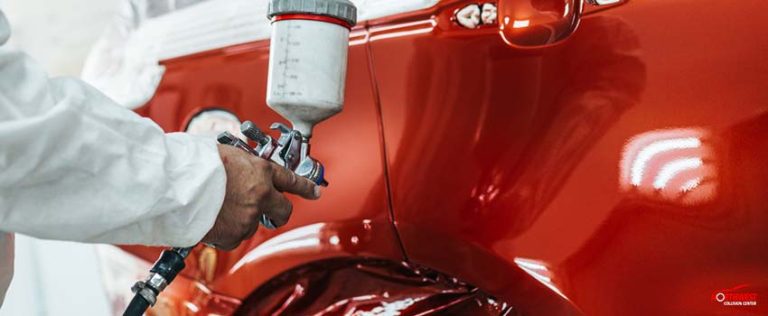
- A paint spray gun
- An air compressor
- Paint thinners
- Primer paint
- A base coat paint (typically, this will be acrylic paint)
- A clear lacquer paint
- A powered buffer
- Face masks and appropriate safety gear, such as safety glasses
- Preferably you should have a sealed room when spray painting
- When using enamel paint, you will need a paint-baking room
Key Takeaway
Cars are a mode of transport that offers Americans freedom of movement. Cars and the manufacturing of cars is a multi-billion dollar industry. The industries associated with cars, such as the car painting industry, also generate billions of dollars in revenue. There are also many psychological factors associated with cars; the most prominent factor is that a car can portray an image of the driver. Lastly, psychological factors also become prominent when choosing a paint color for your car.
Three types of car paint are most commonly used: acrylic lacquer, acrylic urethane, and acrylic enamel. Each type of paint has various advantages and disadvantages. However, the consensus is that acrylic combination paints are the best for car painting. When choosing a car, you must consider various factors, including purpose, functionality, ease of use, image portrayal, environmental factors, and price.
Leave it to the professionals.
Some individuals mistakenly think that DIY car painting will save them money. However, with all the specialized equipment and training required to paint a car properly, a self painted car project can cost you more than one conducted by professionals. Car painting is far from easy and is time-consuming and challenging work. Furthermore, if you are unhappy with the results, you will have to do the entire paint job again at your own expense.
Rather than try to paint your car yourself, it is highly recommended you use a trustworthy and qualified expert. One such expert is Northwest Collision Center, a reliable shop that offers top-notch auto body repair in St. Petersburg, FL, where all the personnel is thoroughly trained, and the latest equipment is used to ensure top-quality results.
Best of all, the Northwest Collision Center can produce a brilliant paint job and do it at a very competitive price. If your car needs repairing or a professional paint job that will leave you smiling happily, entrust your car to Northwest Collision Center.