
Frame straightening refers to a technique which centers on aligning a vehicle’s metal frame as part of a collision repair service. It is often used to restore the structural integrity of a car after an impact. The work is not easy as it involves bending metal, and needs to be done with precision and care.
How Does Frame Straightening Work?
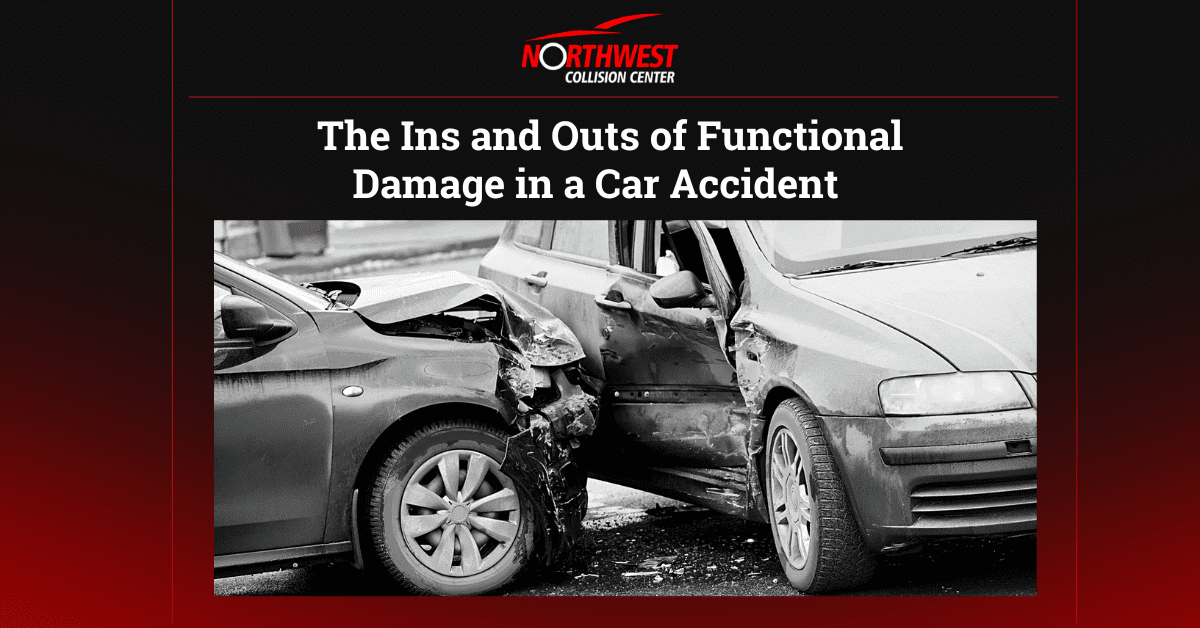
Half of all car accidents cause damage to the vehicle’s frame. As modern automobiles have been designed to crumple upon impact, they can absorb the shock of the collision, effectively sparing the driver and the passengers, but resulting in a badly-damaged frame. Although this can be repaired, it will often involve two critical steps. These are described briefly below.
1. Damage Assessment
The subject vehicle will first be placed on a platform to assess the condition of its frame. A special instrument is normally used to achieve this, which should help determine if the frame can be returned to its original form. Afterwards, a timeframe and a cost estimate will be provided to the customer.
If the frame damage is minor, the needed repair will be quick and simple. On the other hand, a frame straightening machine may have to be used if the damage is severe.
2. Frame Repair
Straightening machines, including hydraulics and chains, are used to bring the distorted frame back to its original form. These machines will initially lift the vehicle onto a platform and make the repair from there. Chains will then be attached to specific parts of the frame. As the chains are pulled back, the frame and its parts will be gradually adjusted until they are restored to their original appearance. Vehicle measurement and verification will follow to ensure that the car is in good condition. If it is, the auto can be returned to its owner.
Damaged Frame Parts That Can Be Repaired
If you’re interested, you can effectively identify the different parts of a car frame. This can help the auto body shop determine if it is possible to repair your vehicle after a collision. With the information you can provide, the shop can use the precise frame straightening equipment to find bends and tweaks that might not be obvious.
The following are the parts of a car frame that can be repaired after a crash:
1. Unibody Frame
If there are no two huge metal rails running from front to back under your car, it is likely that you have a unibody vehicle. This means that the frame and the body of your car form one whole piece. A unibody frame will usually stop an automobile from driving straight if it gets damaged. While unibody vehicles often cannot have their frames straightened as the latter is not an independent entity, there are other repairs that can be looked into.
2. Ladder Frame
Although the ladder frame is an old design, it is still in use on many vehicles, particularly trucks. Generaly, it provides greater strength and resistance than a unibody frame. The setup of a ladder frame is normally made up of two symmetrical rails running the entire length of your car, and is connected to each other by cross members.
A ladder frame can be repaired easily, although cracks, holes, and rust are red flags. Additionally, most accident damage to the ladder frame is invisible to the naked eye and usually comes in the form of bends and tweaks. To ensure that the frame gets aligned correctly, the repair shop has to make the needed measurement.
3. Pillars A, B, and C
These are horizontal supports that can be found across the car, running from front to back. A few vehicles, especially minivans, also have a D-pillar, which is quite fragile and can only be repaired if it suffered serious damage.
4. Core Support
This is also known as the radiator support, the part of the frame located in front of your vehicle. When this gets damaged, it can be replaced separately from the rest of the frame parts.
5. Firewall
The firewall separates the engine bay and the cockpit. Along with the front rails and the strut tower, the firewall helps form a unibody frame design. A damaged firewall can be difficult to repair, although it rarely happens unless it involves a hard front-end collision.
6. Apron
This is the inner fender section of your car that has two sides. Extending from the core support to the strut tower, the apron is one frame part that can be easily repaired using a frame straightening equipment.
7. Floor Pan
This is a sheet of metal normally welded to the cross members and is practically the floor of your car. It usually contains grooves where your electrical wiring is stored. Generally, floor pans can be easily repaired.
8. Hood
Many people don’t know that the unusual shapes under the car’s hood were designed to provide strength and support in the case of a front-end crash. In the event of an accident, damage to the hood will make this less effective, but a repair is possible. The only problem is with the hood supports (where the hinges are located) which could have been damaged separately, and which may require additional repairs.
9. Rear Support
As the name suggests, this part is located at the rear of your car’s frame and is composed of the unirails and the rear bumper. There is also a floorboard that houses the spare tire and in some designs, a removable rear subframe. Although the rear support is usually replaceable, repairs can be challenging.
10. Rocker Panel
The rocker panel is located between the wheels and below the car door on either side. They provide support for the cabin and doors in case your vehicle rolls over as a result of an accident. Rocker panels are usually replaceable using auto body frame straightening techniques.
11. Quarter Panel
This is a sheet of metal attached to the rear of your vehicle, but can be found in the wheel well. The quarter panel houses the gas cap, with some car models like the Corvette having a design made of either carbon fiber or fiberglass and not the standard metal or aluminum.
The skin covering your car’s exterior is unlikely to give the vehicle any strength. Additionally, there are usually components located under an auto’s exterior panels that can hide serious damage, making frame straightening repairs difficult.
12. Strut Tower
There are four strut towers located in each corner of a vehicle. These form part of the rear quarter panels and front apron and help keep your vehicle’s suspension aligned properly.
The strut tower could be damaged by a hard pothole or a contact with a curb or any other object. However, it is normally reinforced to withstand the forces of the road, so damaging the strut is not that easy.
13. Unirails
These are two symmetrical beams found underneath your car, and run from the front to the back. A unirail is one of the strongest parts of a car frame where other automobile components can be welded to, although it can be damaged beyond repair. Replacement can be considered as an alternative solution.
Key Takeaway
Frame straightening is a repair method that you can consider if your car’s body has been misaligned following a collision. A specialist, however, will have to assess the damage that your vehicle incurred before deciding if straightening is an applicable technique.
The car frame is composed of many different parts, and not all of these can be repaired using the straightening technique. Some parts that can be easily fixed include the floor pan, ladder frame, apron, and the hood. Meanwhile, the quarter panel and the rear support are frame parts that can be difficult to repair. In both cases, an expert auto repair shop should be in charge because the straightening process utilizes advanced techniques and equipment that only professionals can ably handle.
Northwest Collision Center is the auto shop to call for your car frame straightening needs.
An auto collision can be devastating, not only to yourself, but to your car as well. When it happens, the vehicle frame often takes the brunt of the damage, and it can end up badly crumpled like a piece of paper. For this, straightening the frame is the ideal solution, and Northwest Collision Center is the expert in using the technique.
The process can be extensive depending on the extent of damage, but our auto body shop in St. Petersburg, FL, has a team of specialists that will ensure that the technique is applied effectively to your car by using advanced tools, including a portable frame straightener. Call us now and we’ll schedule your damaged car frame for straightening right away.