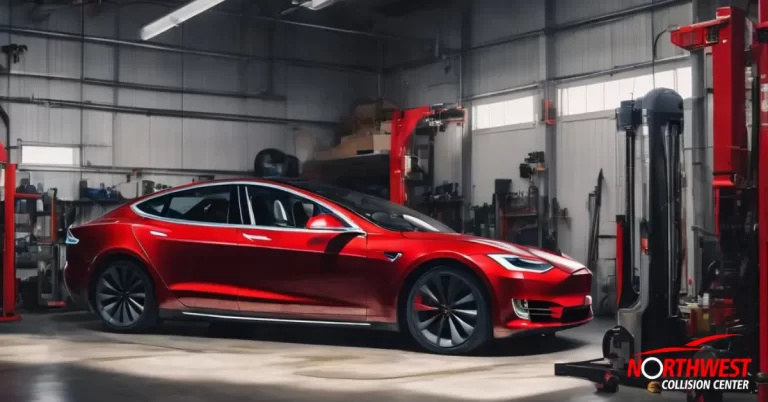
As a proud Tesla owner, you’re familiar with the advanced features and unique experience these electric vehicles offer. However, even with their state-of-the-art safety measures, accidents can still happen. When they do, it’s essential to choose a Tesla-certified collision repair facility that can restore your vehicle to its pre-accident condition.
Getting into a car accident is not a pleasant experience, to say the least. After surviving one and making sure you are okay, the next crucial decision is selecting a repair shop for your car that meets your needs. For Tesla owners, this means finding a facility that specializes in Tesla auto body repair.
What Is Tesla-Certified Collision Repair?
Tesla-certified collision repair is a program offered by Tesla that ensures repair shops have the necessary training, equipment, and expertise to work on their vehicles. Tesla carefully selects and approves these shops, which must meet the brand’s strict standards for quality and customer service.
When you choose a Tesla-certified collision repair facility, you can have confidence that the technicians working on your car have undergone specialized training from the manufacturer. They are well-versed in the unique design and construction of Tesla vehicles, including the advanced electrical systems.
The benefits of a Tesla-certified collision repair extend beyond the technical expertise. These shops also use genuine Tesla parts, ensuring a high level of quality and compatibility. By maintaining your car’s original integrity, these parts help preserve its performance, efficiency, and resale value.
The Tesla Collision Repair Process
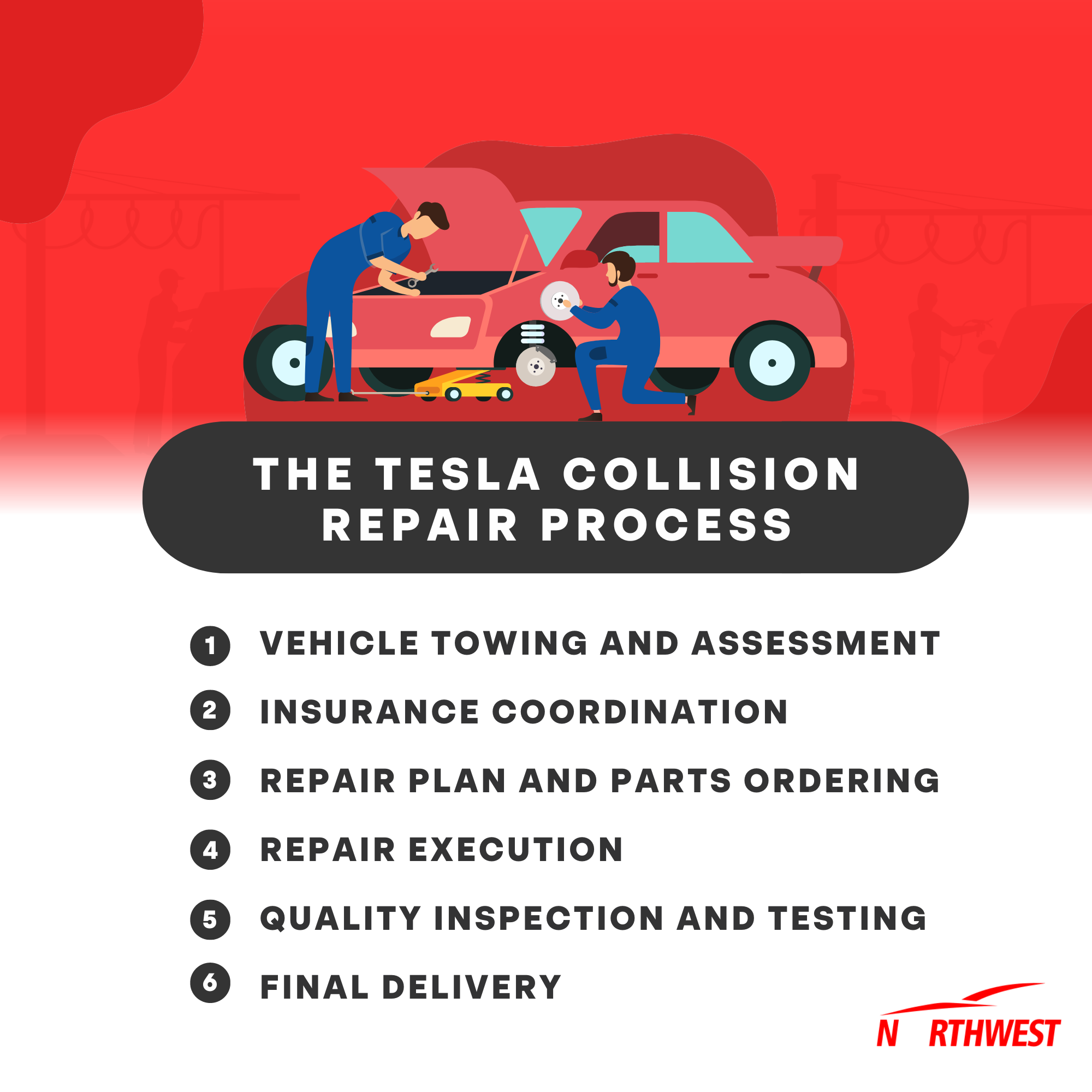
Every collision is different, but the general process for Tesla accident repair follows these steps:
1. Vehicle Towing and Assessment
After an accident, your damaged Tesla may need to be towed to a nearby repair shop. Once it arrives, the repair facility will assess how extensive the damage was. Such evaluation will help create a detailed repair plan and provide the necessary information for any insurance claims.
2. Insurance Coordination
If you plan to file an insurance claim for the repairs, the Tesla-certified collision repair shop can work with your insurance company directly. This coordination ensures a smooth process and clear communication throughout the repair journey.
3. Repair Plan and Parts Ordering
Based on the assessment, the repair shop will develop a comprehensive plan outlining the necessary repairs and the estimated timeline for completion. If any parts need to be replaced, the shop will order them, taking advantage of the original equipment manufacturer (OEM) process.
4. Repair Execution
Once the Tesla-certified collision repair shop receives the required parts, the repair process can begin. Professionals will pay attention to detail and render quality work, following the repair plan and paying close attention to every detail.
5. Quality Inspection and Testing
After the repairs are completed, the shop will inspect the car closely to ensure that everything is in proper working order. In some cases, a test drive may be necessary to verify the car’s performance and safety features.
6. Final Delivery
Upon passing the quality inspection, your repaired Tesla is ready for its final delivery. Your repair shop will schedule a pickup or, depending on the circumstances, facilitate the return of the vehicle to your desired location.
How to Choose the Right Tesla Collision Repair Shop
When it comes to choosing the right Tesla car accident repair shop, consider the following factors:
1. Tesla Certification
Ensure the repair shop you select is Tesla-certified. This will serve as proof that your repair shop meets the automaker’s standards for technical expertise and the use of genuine Tesla parts.
2. Experience and Reputation
Check the shop’s experience and reputation in the industry. Research customer reviews and find out their satisfaction levels with the repair work.
3. Advanced Equipment
Repair shops equipped with the latest technology and tools can efficiently handle the complex repairs that Tesla vehicles often require. Before making a decision, consider whether the shop has the necessary resources to handle your specific model.
4. Insurance Relationships
If you plan to use insurance for the repairs, choose a shop that has established relationships with major insurance providers. This can streamline the claims process and potentially save you time and effort.
5. Warranty and Guarantee
Inquire about warranty and guarantee from your repair shop. A reputable facility should stand behind its work, providing assurances about the quality and durability of the repairs.
6. Customer Service
Good customer service is essential during the repair process. Look for a shop that communicates effectively and updates you regularly.
The Bottom Line
Getting into a car accident is never a pleasant experience, but with the right approach, you can minimize the hassle and stress. As a Tesla owner, this means choosing a repair shop that specializes in Tesla collision repair.
Opting for a Tesla-certified collision repair facility ensures the best care for your car from technicians who are well-versed experts in the intricacies of Tesla’s design. Remember, too, that not all shops are created equal, so it’s crucial to do your due diligence when selecting a repair provider.
Find the Best Auto Body Shop For Your Tesla
If you’re looking for a reliable Tesla auto body shop in Sarasota, FL, look no further than Northwest Collision Center. With our extensive experience in auto body repairs and our commitment to quality, we can get your Tesla back on the road in its pre-accident condition.