
Tesla offers cutting-edge technology and innovative designs. But with these advancements in electric vehicles come problems on how to repair dents and damages.
Dealing with dents on any vehicle can be a frustrating experience, but it becomes even more so for Tesla owners. These electric cars are known for their sleek and seamless designs, so any dent or scratch can be a real eyesore.
However, the challenges of dent repair in Tesla go beyond aesthetics. The intricate and complex features of these vehicles can significantly affect the repair process, requiring specialized knowledge and equipment.
If your Tesla has suffered a dent, it’s essential to understand these challenges to make informed decisions about the repair. In this article, we’ll explore the common hurdles in Tesla dent repair and the best ways to address them.
What Makes Tesla Body Repair Different?
Tesla body repair typically involves addressing damage to the vehicle’s exterior, including dents, scratches, and other imperfections. While these repairs share similarities with those of traditional cars, Tesla dent repair comes with its own set of unique challenges and considerations.
One of the primary factors that set Tesla dent repair apart is the use of advanced materials. Tesla vehicles are often made with aluminum and high-strength steel, which are lightweight yet durable. However, these materials require specialized techniques to repair properly, adding complexity to the dent repair process.
The second factor is the sophisticated technology integrated into Tesla cars with their cameras and sensors and other advanced driver-assistance systems (ADAS). When a dent occurs, there is a risk of damage to these systems, making it crucial for technicians to have expertise in handling both the dent and the technology.
Challenges in Tesla Dent Repair
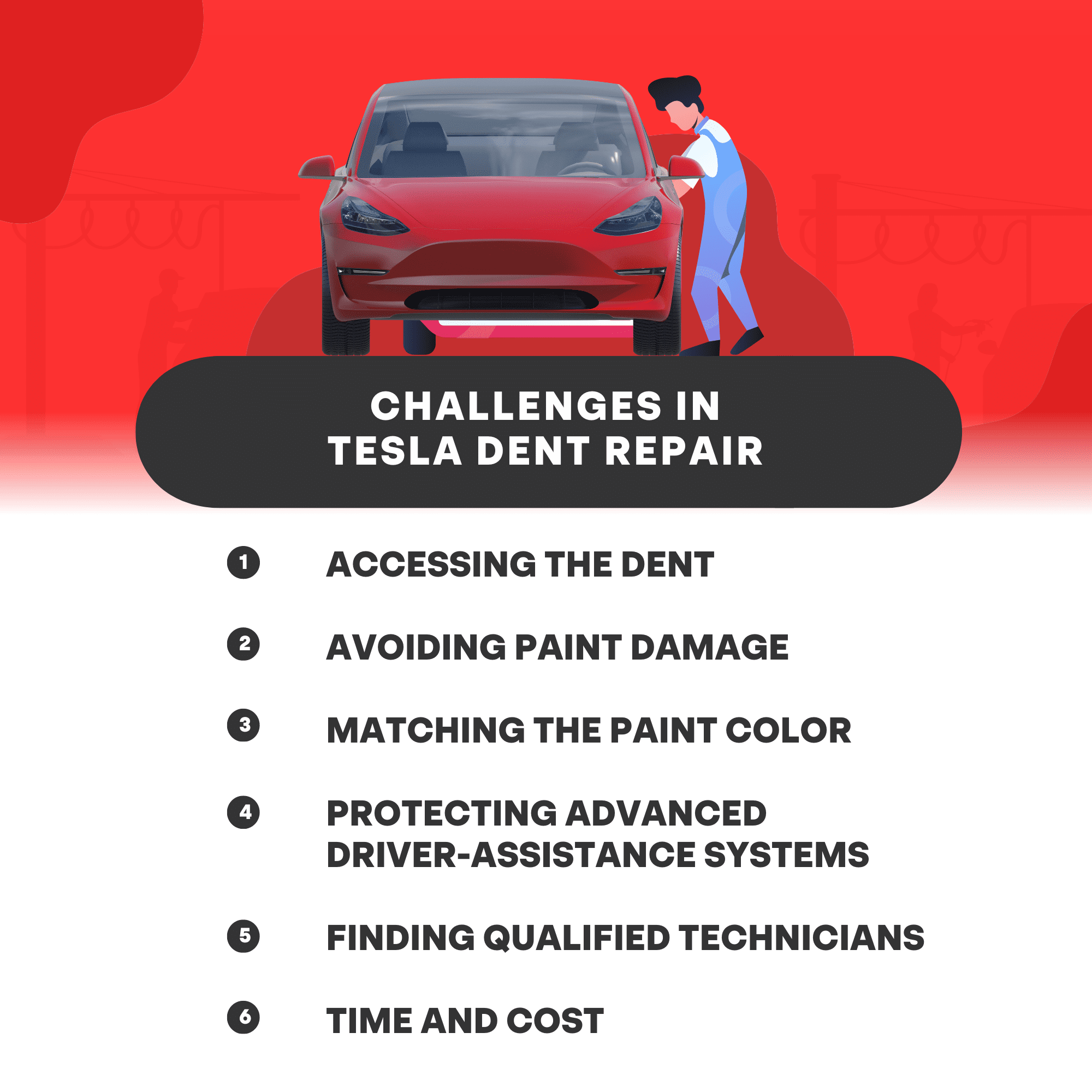
Repairing dents on Tesla vehicles can be a complex process, primarily due to the following challenges:
1. Accessing the Dent
Tesla dent repair often requires careful navigation around the vehicle’s unique design elements, such as flush-mounted door handles and panoramic roofs. These features can make it challenging for technicians to access the dent, as traditional methods like reaching through windows or using specialized tools may be required.
2. Avoiding Paint Damage
When it comes to addressing dents, the next challenge is doing so without causing any additional damage to the paintwork. Tesla vehicles are known for their flawless finishes, so any misstep or error during the repair process can result in costly paint damage.
3. Matching the Paint Color
Preserving the original paint color is paramount in dent repair. Tesla owners often seek a seamless finish. However, achieving a perfect color match can be challenging due to the unique paint formulations used by Tesla and the potential for the original color to fade or change over time.
4. Protecting Advanced Driver-Assistance Systems
Avoiding damage to advanced driver-assistance systems is a significant concern in Tesla dent repair. These systems, such as cameras and sensors, are often integrated into the vehicle’s exterior, precisely where dents occur. Technicians must take extra care to protect these components during the repair process to avoid any disruption to the vehicle’s safety features.
5. Finding Qualified Technicians
Given the complexity of Tesla dent repairs, the fifth challenge is finding technicians who are trained and experienced in working on these vehicles. Not all auto body shops have the expertise and knowledge to handle the unique features and materials of Tesla cars, so finding a qualified and skilled technician is crucial for a successful dent repair.
6. Time and Cost
The last challenge is time and cost. Solving the dents on Tesla vehicles can take longer and be more expensive compared to traditional cars. The specialized techniques and equipment required for Tesla paintless dent repair may lead to extended repair times and higher costs.
Best Ways to Address Tesla Dents
1. Choose a Tesla-Certified Repair Shop
When faced with a dent in your Tesla, the first and most crucial step is to choose a reliable Tesla body shop. These repair shops have been specifically authorized and certified by Tesla to work on their vehicles, ensuring that they have the necessary expertise and equipment to handle the unique challenges of Tesla dent repair.
2. Assess the Damage
After selecting a certified repair shop, the next step is to assess the damage. This will help you determine the best course of action for the repair. In some cases, traditional dent repair methods may be suitable, while in others, more specialized techniques, like Tesla paintless dent repair, may be required.
3. Coordinate with the Repair Shop
Once the assessment is done, the third step is to coordinate with the chosen repair shop. For an efficient repair process, effective communication is crucial. Be sure to provide all the necessary details and schedule the repair at a convenient time.
4. Check for Available Parts
If any parts need to be replaced, it’s essential to check for their availability. Some Tesla body shops may have direct access to genuine parts, which can expedite the repair process.
5. Inquire About Rental Options
While your Tesla is being repaired, the fifth step is to inquire about rental options. Many Tesla-certified repair shops offer rental services, and some may even have loaner vehicles available, allowing you to continue your daily activities without any disruption.
6. Consider Your Insurance Coverage
Before giving the go-ahead for the repair, check your insurance coverage vis-a-vis the repair costs. Some insurance policies may have specific provisions for Tesla repairs, and choosing a shop recommended by your insurer can help streamline the claims process.
7. Regularly Inspect the Repair
Once the repair is complete, the seventh step is to conduct a thorough inspection. Check if the dent has been effectively repaired and if any replaced parts are properly installed. Quality Tesla body shops will ensure that the repair meets the highest standards and can address issues as they crop up.
The Bottom Line
Dealing with a dent in your Tesla can be a stressful experience, but with the right approach, you can have your vehicle back to its pristine condition in no time. Remember, the key is to choose a certified repair shop that specializes in Tesla dent repairs and to coordinate closely with them throughout the process.
While it’s natural to be concerned when your Tesla needs body work, taking swift action and following the recommended steps will ensure that you will find an auto body shop capable of restoring it to its pre-damaged state.
Need Reliable Tesla Body Repairs?
If you need an expert Tesla body shop in Clearwater, FL, look no further than Northwest Collision Center. Our team of professionals will help you in getting your Tesla back to its pre-collision and sleek state. Contact us today!