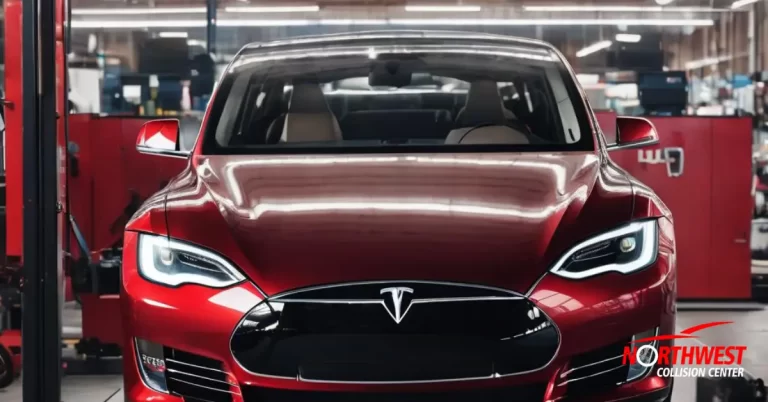
Whether you own a Tesla or not, it’s essential to stay informed about the most common repairs for these electric vehicles. The rising popularity of Teslas on the road means more of them will require maintenance and repairs in the coming years.
If you find yourself in need of a Tesla body repair due to an accident or other mishap, it’s crucial to have a plan in place for getting your vehicle back on the road in its pre-accident condition. The good news is that there are specialized auto body shops that can handle the unique needs of Tesla repairs and restoration.
Tesla vehicles are made with aluminum bodies to reduce weight and increase efficiency. While this design choice has its benefits, it also means that Tesla owners may face some unique challenges when it comes to auto body repairs. Working with aluminum requires specific tools, equipment, and years of experience to ensure high-quality results.
5 Most Common Tesla Repairs
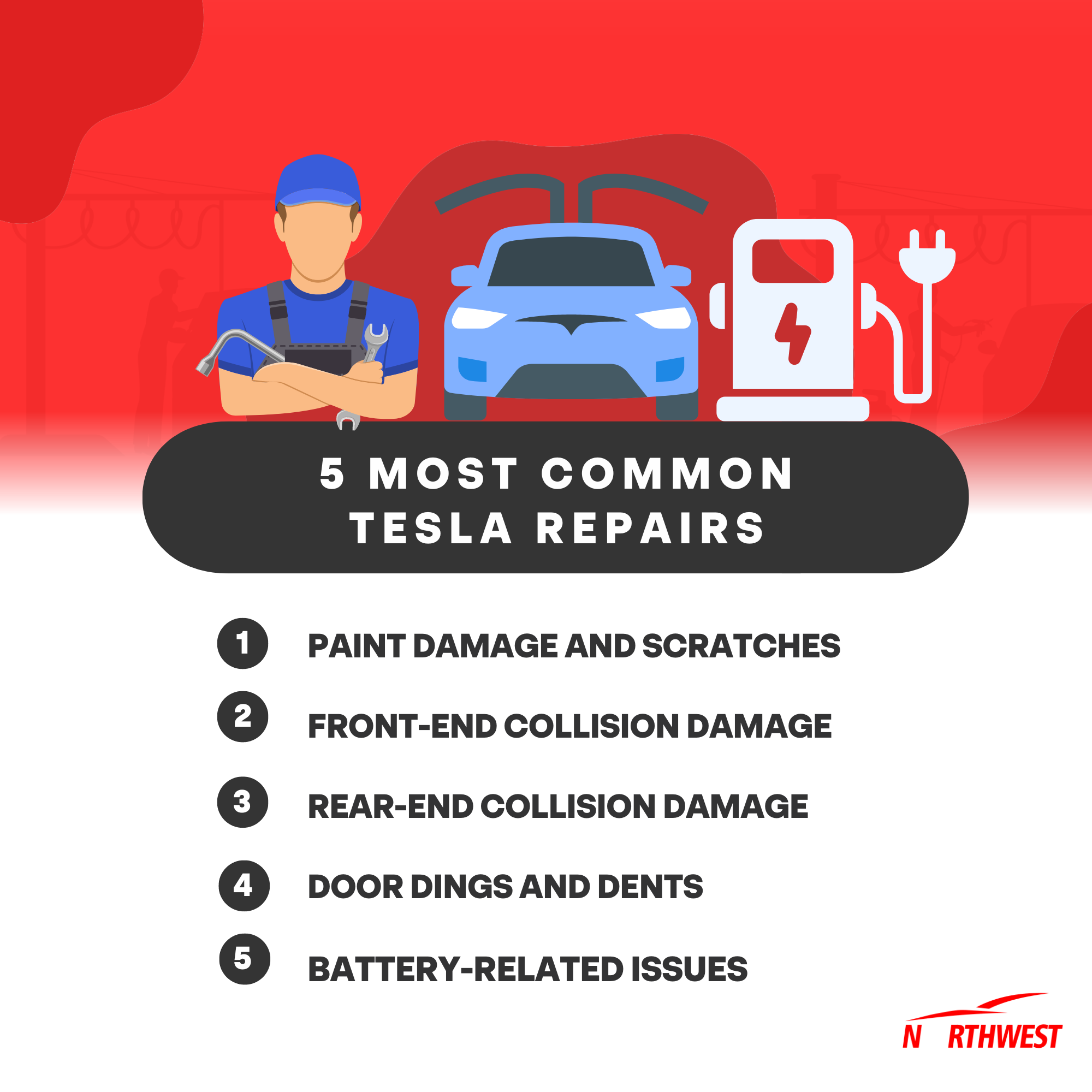
1. Paint Damage and Scratches
Paint damage and scratches are common issues for any vehicle, and Teslas are no exception. The sleek and glossy finish on a Tesla makes any imperfections, such as dents, dings, and scratches, more noticeable. These can occur from minor accidents, keying, or even environmental factors like hailstorms and gravel.
When it comes to Tesla body repairs for paint damage and scratches, the extent of the damage affects the extent of the repair needed. Buffing and touching up are sufficient for minor scratches, while more significant damage may require panel repainting. It’s important to note that Tesla’s unique paint colors and finishes may require specialized attention to match the original color.
2. Front-End Collision Damage
Due to their popularity, Teslas are more prone to accidents, including front-end collisions. The front-end of a Tesla is particularly vulnerable because it houses the electric powertrain, which is responsible for the vehicle’s propulsion. In a front-end collision, the impact can damage not only the traditional components like the bumper, grille, and headlights but also the electric powertrain itself.
Getting your Tesla fixed after a front-end collision can be more complex than with a traditional vehicle. The Tesla collision repairs often involve careful inspection of the electric powertrain to ensure there is no internal damage. Some Tesla models require the use of specialized equipment to recalibrate the advanced driver-assistance systems (ADAS) to restore them to their pre-collision state.
3. Rear-End Collision Damage
Similar to front-end collisions, rear-end collisions are also a common cause of damage to Teslas. The impact from a rear-end collision can damage the trunk, rear bumper, taillights, and, in some cases, the electric powertrain. As with any vehicle, the severity of the damage can vary, ranging from minor cosmetic issues to more significant structural damage.
When it comes to getting your Tesla repaired after a rear-end collision, it’s essential to choose an auto body shop experienced in handling Tesla body repairs. Some Tesla models have sensors and cameras in the rear that assist with parking and other features. These components may require careful calibration or replacement to ensure they function correctly after the repairs are completed.
4. Door Dings and Dents
Door dings and dents are everyday occurrences, and they can happen to any vehicle, including Teslas. These types of damage can occur in parking lots, tight spaces, or from other car doors hitting yours. Since Teslas have smooth and often frameless doors, dings and dents can be more noticeable.
Addressing door dings and dents in a Tesla typically involves traditional dent repair techniques such as paintless dent removal. However, in some cases, if the damage is more severe or if the paint is affected, conventional Tesla car repairs may be necessary. It’s important to note that if your Tesla has advanced driver-assistance system features, such as sensors in the affected doors, those will need to be checked for any damage or calibration needs.
5. Battery-Related Issues
Battery-related issues are unique to electric vehicles, and Teslas are no exception. While Tesla’s batteries are known for their performance and longevity, they can still experience problems. The most common issues include faulty charging ports, battery degradation, and, in rare cases, thermal runaway.
When faced with a battery-related problem, it’s crucial to rely on a Tesla-certified service center rather than a traditional auto body shop. These specialized facilities are fully-equipped to diagnose and address the specific components of the electric powertrain accurately. It’s important to note that attempting to fix battery-related issues yourself or going to an unauthorized repair shop can void your Tesla’s warranty.
Conclusion
As the popularity of Tesla vehicles continues to grow, so does the need for specialized auto body repair services. If you own a Tesla, it’s essential to be aware of the most common repairs and find an auto repair shop with a track record of success in repairing these unique electric vehicles.
Get Quality Tesla Repairs With Northwest Collision Center
To ensure your Tesla is repaired to the highest standards, consider the services of Northwest Collision Center. With our expertise in Tesla auto body in St. Petersburg, FL, we can set your vehicle back to its original, mint condition, a Tesla that looks as good as new. Contact us today!