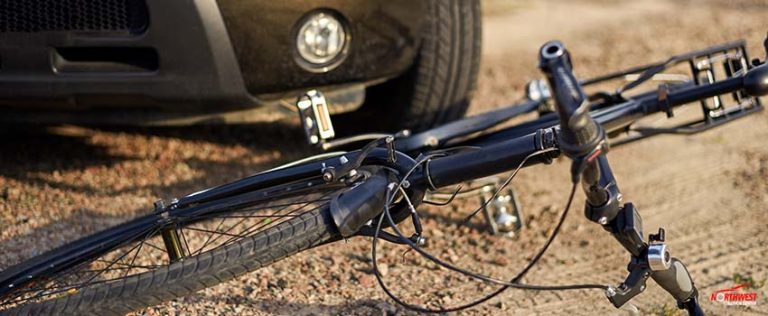
Biking is safe, enjoyable and healthy, but it has its fair share of risks, notably bicycle and car accidents. Various hospital reports reveal that cyclists are among the most seriously injured road users when compared to other groups. Unfortunately, most hospitals do not provide enough details about these accidents which hinders many police investigation efforts.
Side of the Road Rule
Briefly, the side of the road rule declares that cyclists must ride on the extreme right side of the street. This is strictly enforced in all states and bikers are required to follow them to avoid suffering from bicycle-related injuries. Strangely, by following the side of the road rule, bicyclists often get caught up in many traffic accidents involving themselves and car owners.
Common Cycling Accidents
If you’re a biker, below are the common road accidents that you’ll likely encounter at some point.
1. Parked Cars
Of the many types of traffic accidents, this one occurs with alarming frequency. It usually happens when the passenger of a parked vehicle opens his or her side of the door without checking if there is an approaching cyclist from behind. In this case, most bikers don’t have enough time to make a sudden stop especially if there’s no clear sign that the vehicle door is set to open out to the right side of the road.
2. Reckless Drivers
Bicycle and car accidents are also caused by reckless drivers and speedsters. Bicyclists are more at risk due to the absence of any physical protection, other than a safety gear, so when a fast-moving car passes by them, the rush can cause bikers to lose their balance.
3. Right Turning Vehicles
This is another common cause of cyclist-related road accidents. Sometimes, a vehicle would turn right at high speed and hit an approaching cyclist who didn’t have enough time to stop. Another scenario is when a car underestimates its speed and moves into the biker’s lane quickly, leaving the cyclist with practically no time to react.
4. Overtaking Vehicles
This is one of the most common causes of bike accidents as bicycle and car accident statistics show that over 75% of collision reports involved intersection-related cases. It happens when a driver suddenly speeds up as it prepares to turn. In the process, he or she overtakes a cyclist, eventually placing his or her vehicle in the path of the bicycle owner. The assumption of the driver is that the biker will slow down to avoid crashing into the turning vehicle, but this is not always the case.
Bicycle Laws
Increased federal funding has resulted in the creation of more bike lanes and trails than ever before.These improvements are designed to make riding safer for everyone and for commuting to work to become more comfortable.
If you prefer to drive a car rather than to ride a bike, you should at least familiarize yourself with the laws in your state that aim to protect bicyclists. Some of these laws as listed below might be applicable to you if your car ever gets involved in any accident involving a bike.
1. Safe Passing
This is also known as the 3-feet rule, which provides that a motor vehicle must allow a minimum of three feet clearance space for a bicyclist. More than 20 states have passed laws that provide for this requirement as it gives drivers a frame of reference and helps them to see clearly.
If drivers need to overtake cyclists, they should do so slowly and steadily in order to give the latter breathing space. A lot of motorists tend to accelerate and pass cyclists as fast as they can and this can lead to an accident with the biker sustaining bicycle-related injuries.
2. Vehicle Treatment
Bicycles are considered as vehicles; thus. bikers enjoy the same rights as regular drivers. Bicyclists are allowed to ride in the traffic lane, switch to the right when making a turn, and be stopped when violating traffic rules.
3. Respect Bike Lanes
A bicycle lane refers to a section of a street that is reserved for cyclists. It has pavement markings and arrows to direct bicyclists in the right direction. Car owners are not permitted to park or drive into this lane; they can only cross a bike path when entering or exiting driveways
4. Dooring Law
According to this law, passengers inside a parked vehicle do not have the right or privilege of opening the door carelessly. They can only do so after ensuring that the area is safe and that their parking doesn’t hinder traffic.
The aim of the law is obviously to protect bikers. When a door of a parked vehicle suddenly opens as a cyclist approaches, it places the latter in great danger.
5. Know Biking Signals
Bicyclists use special signals when riding the streets. Ideally, motorists should take some time to familiarize themselves with these so various types of traffic accidents can be avoided.
Many bike signals are simple and easy to understand and often make use of the left hand since the right hand stays on the handlebars for stability. For example, when turning left, the biker will extend the left arm straight out to his or her side parallel to the ground. When turning right, the left arm is extended straight out from the shoulder. The elbow is bent and the left hand is pointed straight up, the arm consequently forming an L shape.
When slowing down, cyclists will do the opposite of the right hand turn. They will extend the left arm straight out from the shoulder. The elbow is bent and the left hand is pointing straight down.
6. Stay Right
Per the side of the road rule, bicyclists have to stay on the extreme right side lane. While bikers often observe this, many car owners tend to forget about this rule and intrude into areas that are for the exclusive use of cyclists.
7. Shared Space
Drivers who only see other cars on the roads are at risk of encountering vehicular accidents. Under the shared space concept, traffic comes from all directions and types. These include not only four-wheeled vehicles, but also motorcycles, bikes, pedestrians, traffic lights, road signs, and crosswalks, all of which use the same road space which is limited and should thus be shared to everyone.
Key Takeaway
Bicycle and car accident statistics indicate a steady increase partly because more people are now using bikes as their mode of transportation for health and practical purposes. Another reason for the rise in bicycle and car collisions has to do with insufficient public knowledge about cycling laws and ordinances that are already existing in several states.
While these laws are meant to protect cyclists, motorists have the responsibility of becoming aware of them so they will know if they are at fault and avoid a possible car vs bicycle accident settlement. For example, the bike lane policy and the dooring law are enforced in many places, but car owners often violate them. This often results in vehicle damage which can be serious at times, with the car ultimately taken to an auto shop for the needed repairs.
Contact Northwest Collision Center to fix auto damage caused by bicycle and car accidents.
If your vehicle suffered a dent or any other type of damage because a biker accidentally crashed into it, trust Northwest Collision Center to do an excellent repair job.
We are the experts when it comes to car repairs and remodeling. Our auto body shop in Largo, FL, is equipped with the latest technology in auto design and repair. Call us now and let our team of highly-skilled technicians prove just how good we are.