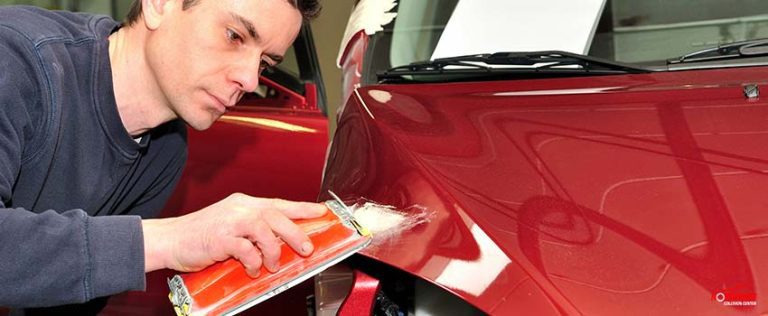
While it may look easy, the reality is that auto body repair involves specific techniques, requiring a lot of skill and the right tools and training to be done correctly. This article will examine some of the more common car body repairs and the work involved. This will also explain why some tasks should be left to the professionals, including these car repairs you should not do yourself.
Most people try DIY auto body repair in an effort to save money, but the reality is that, more often or not, do-it-yourself repairs end up costing more than repairs conducted by professionals.
DIY Car Repair Can Cost You More Time and Money
To save time and money, many of us have tried DIY auto body repairs only to find that the exercise cost us more than if we had given the job to a professional. DIY auto body repair can take more time and money because the repair work is rarely just on the surface. Halfway into the project, previously unseen problems may become apparent.
For example, if your car has been involved in a car crash, what looks like a damaged panel could be a much more severe problem, such as a bent frame, or what looks like surface damage could turn out to be structural damage. In such cases, a DIY car body repairs dent is not recommended.
Lack of Proper Tools and Equipment
One of the significant reasons people take their car to a professional auto repair shop is because they lack the proper tools and equipment to do the repairs themselves. For example, professional panel beaters will use six specific types of hammers depending on what repairs they are doing.
The panel beaters hammers include:
- Panel Beating Hammer. As the name suggests, the panel beating hammer is used for beating dents and reshaping panels. Many different types are available, including flat-faced, crown-faced, round-faced, and square-faced, and they are also differentiated by weight, coming as light or heavy weight hammers.
- Cross Pein Hammer. A cross-pein hammer is a type of hammer where the head is perpendicular to the handle. This hammer is used for bumping out dents. Usually, a cross-pein hammer used for metal work will have two hammerheads, one that is flat and one that is round.
- Pick Hammer. The pick hammer is a type of hammer with a round flat face on one end and a pointed tip on the other. Geologists and rock climbers commonly use this type of hammer; however, it can also be used on the inside of a panel to pick out a dent.
- Shrinking Hammer. On a shrinking hammer, the hammerhead face includes spirals and mills (a metal pattern), which are then covered by vulcanized rubber. When the hammer face impacts a metal surface, it slightly grips the metal surface, which causes the metal to shrink.
- Heavy Roughing Hammers. One of the things you will have to do when trying DIY auto body repairis roughing. Roughing is where the metal surface is beaten into a shape roughly resembling the final shape. To do this, panel beaters will use heavy roughing hammers.
- Dead Blow Hammers. Last but not least, there is the dead blow hammer, a rubber hammer with a hollow head filled with metal shot. Upon impact, the shot disperses the energy produced, reducing rebound and strengthening the blow’s force.
Other Tools Needed
If you are determined to try your hand at do it yourself auto body work, you will need the following tools:
- The dolly is a curved metal device placed against the metal sheet and struck by a hammer. The force of the blow will curve the metal to the shape of the dolly’s surface. A dolly can also be used as an anvil where the metal is bent over the curved surface of the dolly and then beaten with a hammer.
- Metalworking spoons are hand-held tools with contoured shapes used to shape metal. They are placed against the metal and then struck with the hammer causing an indent in the metal in the shape of the spoon. Using a spoon shapes the metal without the hammerhead making contact with the metal surface.
- The bumping file (also known as the slapping file) and the body file are also needed for DIY auto body repairs. The body file is used on flat surfaces to smooth the surface and remove indentations and scratches. When you get a ding or a small dent in a metal surface, that ding will have high and low spots. The surface of the bumping file also has low spots and high spots, which means you can use it together with a dolly to slap the high spots down and raise the low spots up.
Vehicle Prepping Before Repair Work
Prepping your car for repair work can be time-consuming, physically, and mentally challenging. Furthermore, if the prepping is not done correctly, you will not get the desired results, you may cause further damage to the car than is already there, and the repair job will have to be done again, costing you more time and money.
Health and Safety Concerns
Doing auto body repair work can be damaging to your health. Many toxic chemicals are included in substances such as paint, auto body polishes, and auto body fillers. The chemicals in paint and fillers can cause eye, skin, and respiratory tract problems. These chemicals have even been associated with cancer. Furthermore, car auto body repair also uses machinery that produces dust particles.
Car repair often involves machinery such as saws, drills, and sanders, which can cause physical injury if not used properly, and accidents happen.
Other Car Repairs You Should Not Do Yourself
Several other car repairs you should not do yourself include:
- repairing the air conditioning
- installing a new windscreen
- repairs to the transmission
- tire balancing
- repairs to the electrical system
- suspension system
- altering the timing belt
Conclusion
It may be tempting to try DIY auto body repair to save money. However, this belief is ill-founded, and the reality is that attempting to do car repairs yourself will cost you more time and money than if a professional car repair shop does the repair work. Car body repair is a very specialized field requiring training, specific tools, and mechanical aptitude. It is, therefore, best left to the experts rather than attempting to do it yourself.
Leave it to the experts!
It is a fact that attempting a do it yourself auto body work to save money is more often than not an exercise in futility and can end up costing you more than if you leave the job to an expert. Expert car body repair shops like Northwest Collision Center, a trusty auto body shop in St. Petersburg, FL, can repair your car to a straight off-the-showroom-floor condition, and they can do it quickly and inexpensively. Call us today to get a quote!